.png)
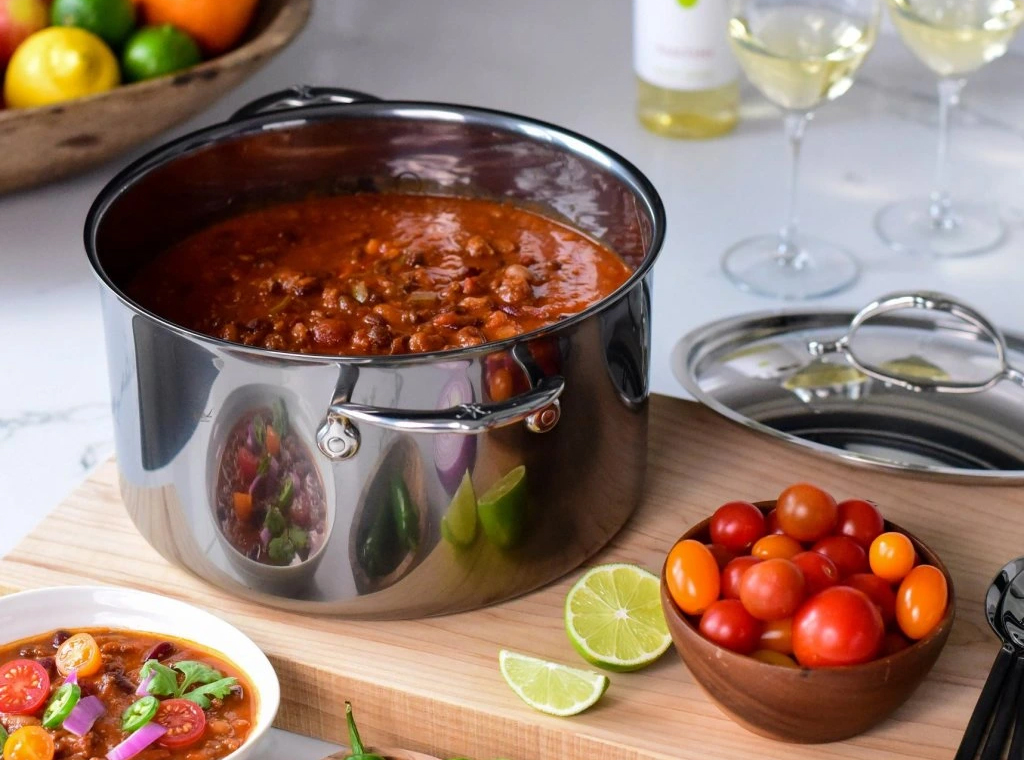
If you only want to buy one essential cooking pot for your kitchen, a classic one is the way to go. With this name, you'll find the most versatile cookware – usually medium-sized, with straight sides, a lid, and two handles. They are ideal for cooking pasta, soups, sauces and legumes.
Choosing a classic cooking pot may seem simple at first glance – you just take the one you like and that's it. However, once you start thinking about the material, the type of hob, the method of maintenance, or even why food sticks in some pots and not in others, it starts to get a little more complicated. But we're happy to help you with that.
Most popular classic cooking pots according to our customers' reviews
Product Comparison
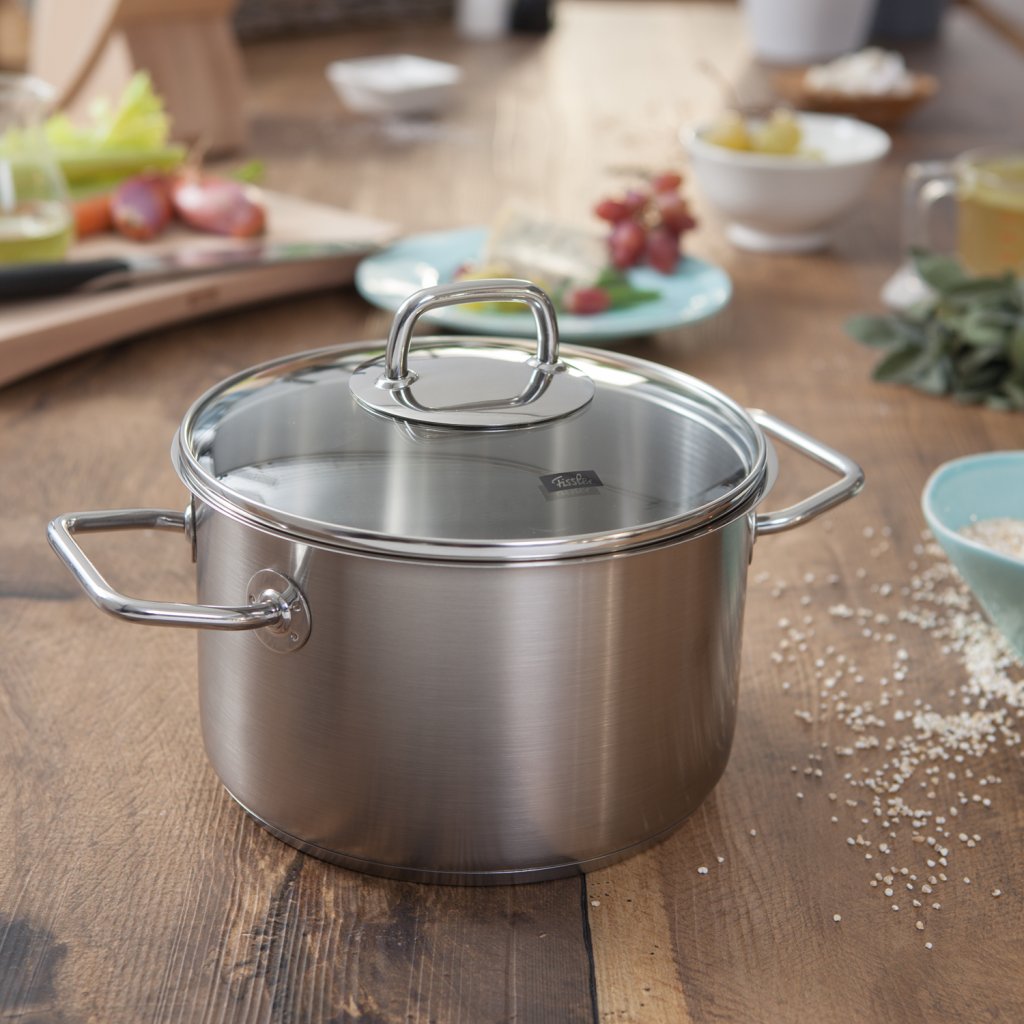
- Durable, suitable for all hob types, including induction.
- If they have a sandwich base, they distribute heat quickly and evenly.
- Ideal for everyday cooking.
- They do not have a naturally non-stick surface, therefore cooking requires responsible temperature control and good quality fat.
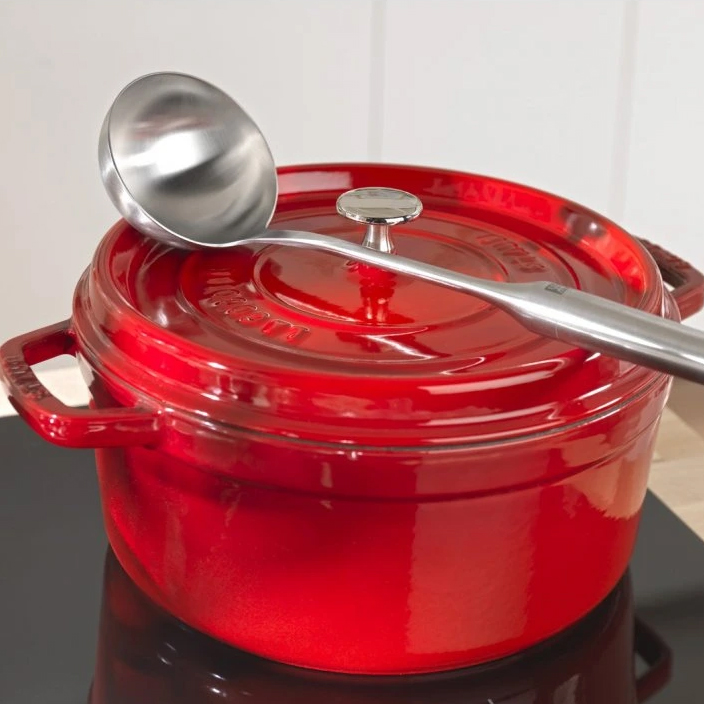
- Slow and even cooking, ideal for stews, sauces and braised meats.
- Perfectly retains heat, even long after the hob is switched off.
- After seasoning, they have a naturally non-stick surface.
- Cast iron is naturally magnetic, so it always works on induction.
- You need to allow for a higher weight, which requires more strength and a steady hand when handling.
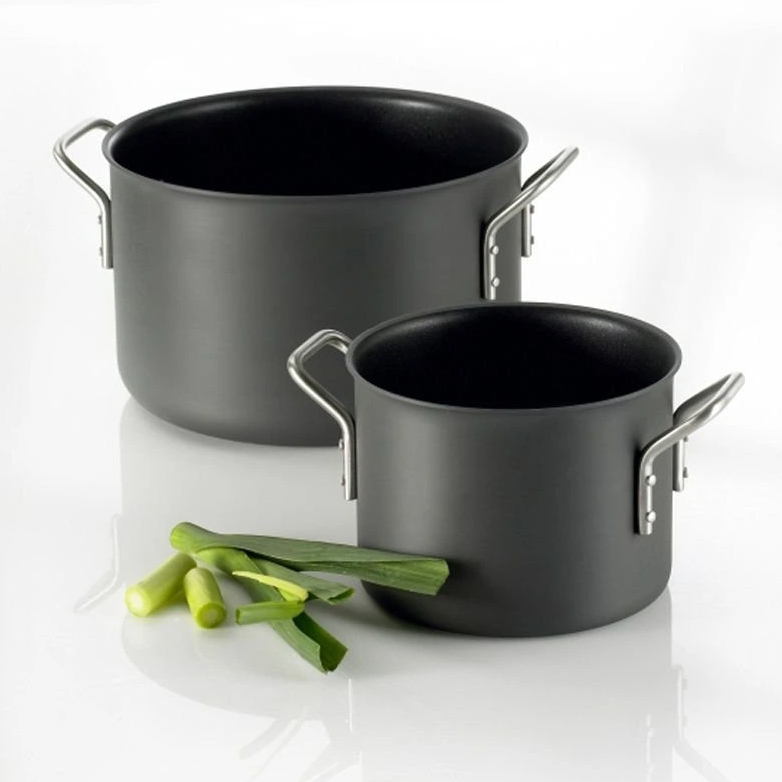
- In the vast majority of cases, they have a non-stick surface, so they are great for anyone who wants to cook comfortably with minimal fat and without burning.
- Ideal for sauces, cream dishes or vegetable mixes.
- Non-stick coatings should not be placed in the oven, as high temperatures are not suitable for them.
- Requires careful handling - without metal utensils and cooking over low heat.
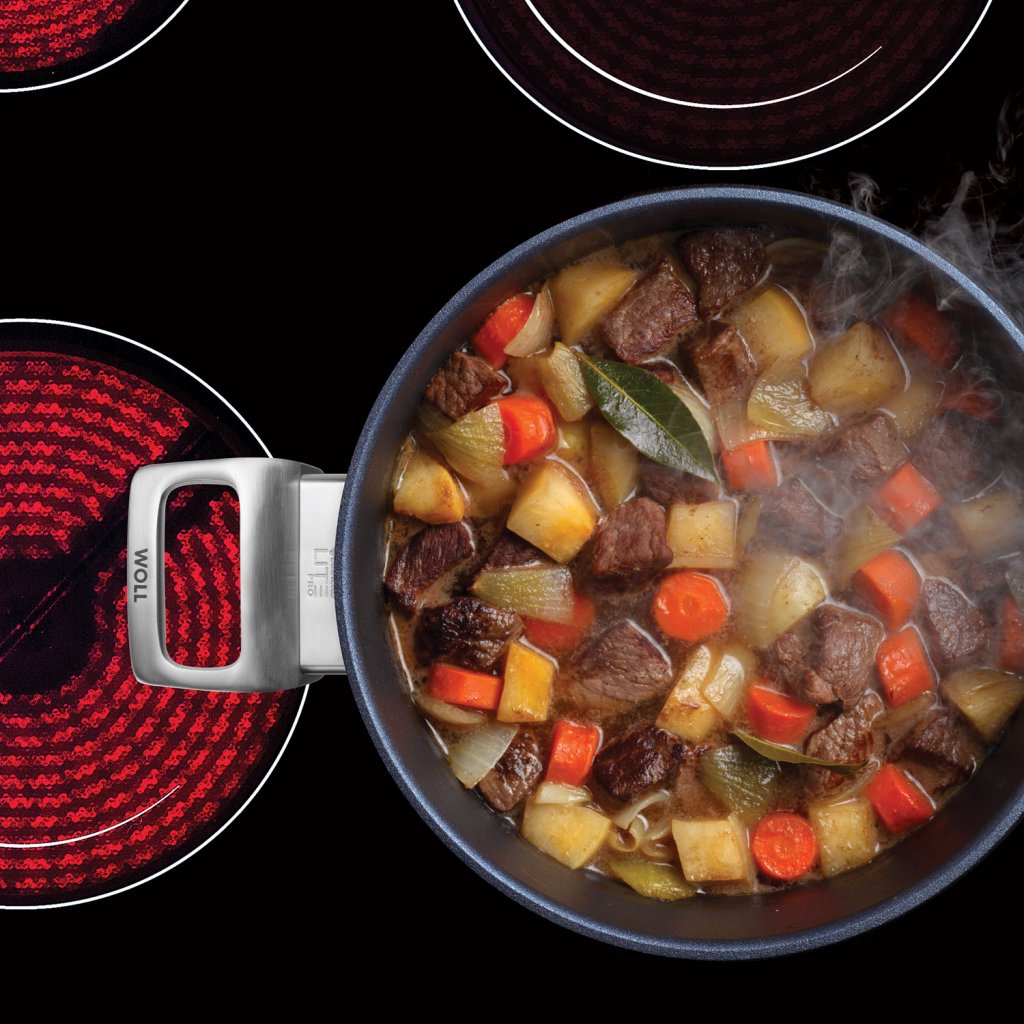
- Extremely durable and non-stick surface, also suitable for demanding everyday cooking.
- Significantly stronger than conventional non-stick materials.
- Resistant to scratches and high temperatures, usually also suitable for the oven.
- Higher purchase price, but corresponds to a long service life.
- Despite its durability, careful handling is recommended - without sharp metal tools.
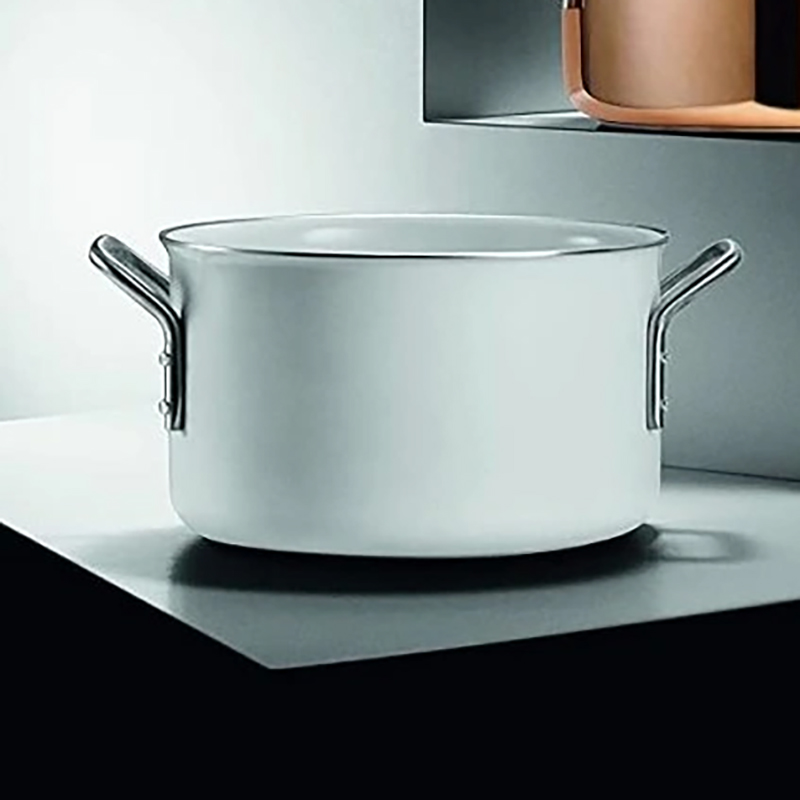
- Non-stick surface without chemical additives, suitable for healthy cooking.
- Beautiful design, often in pastel colours, therefore they are also suitable for serving.
- Maintains temperature longer than classic non-stick pots.
- More fragile than other materials – they can crack upon impact or rapid temperature changes.
- Less non-stick than other non-stick materials.
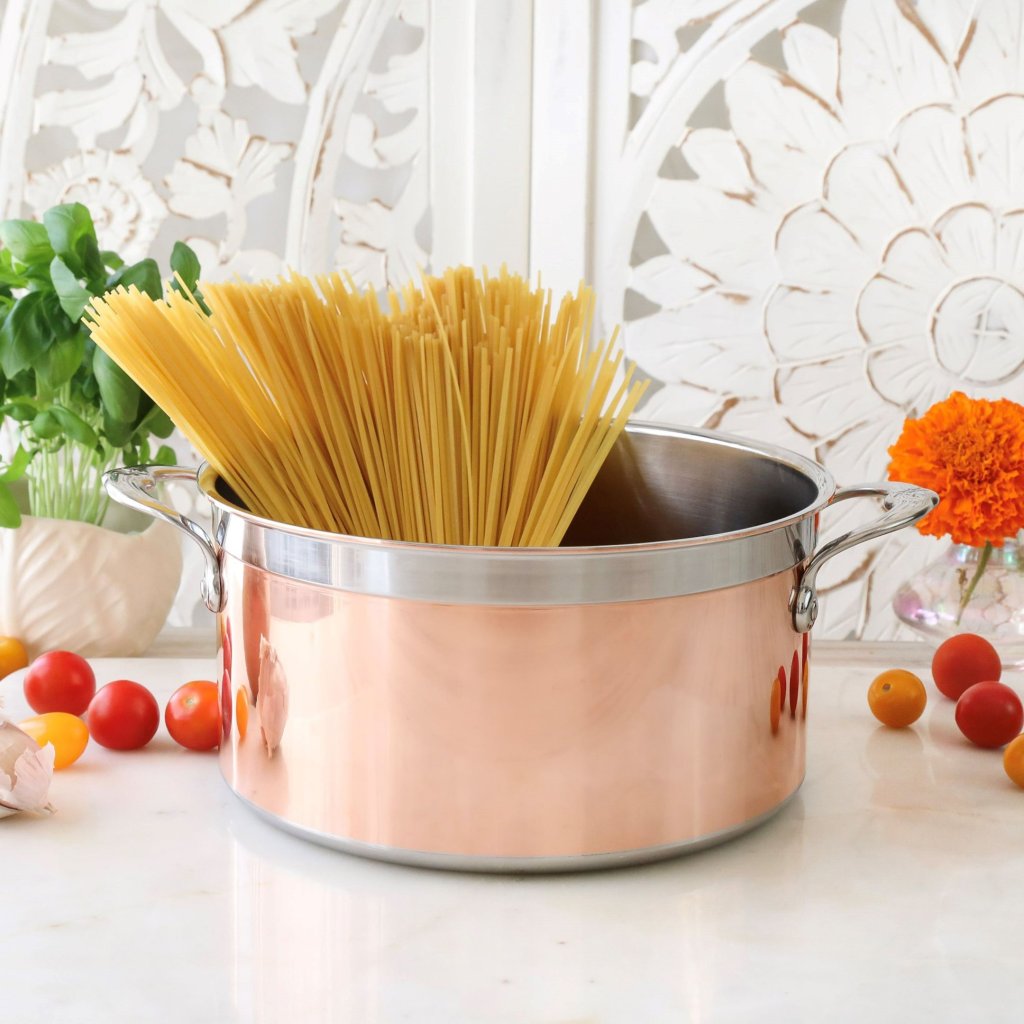
- They react almost instantly to temperature changes, making them suitable for preparing delicate sauces, caramel, or dishes where precision is key.
- They look exceptionally elegant and often become a kitchen decoration.
- The inner surface of the cooking pot should be stainless steel. If not, it is not suitable for preparing acidic dishes.
- You should expect a higher price and the need for regular care. Copper oxidises and requires polishing.
- Most copper cooking pots do not work on induction hobs (they would need to have a special sandwich bottom with a magnetic layer).
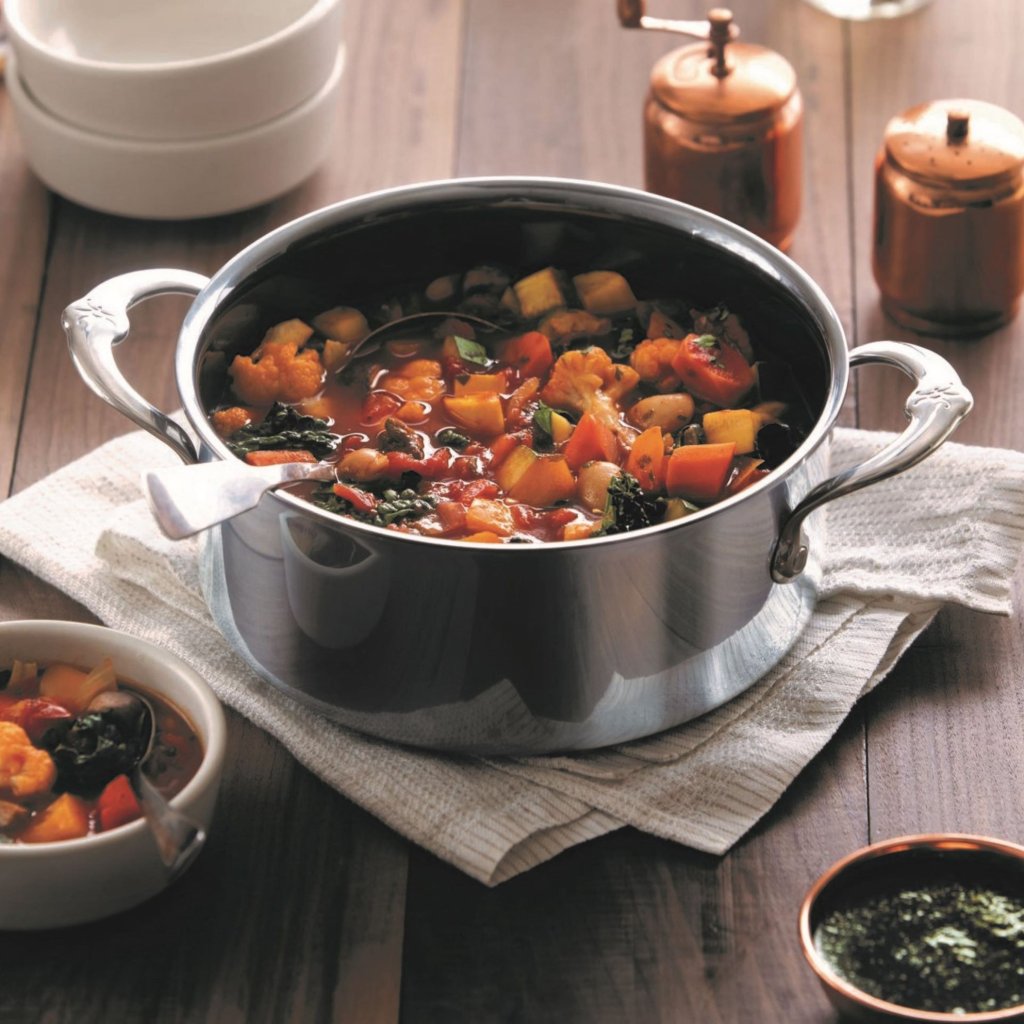
The cooking pot base – a hidden hero
You can recognise a quality cooking pot by its well-designed base:
- For stainless steel cooking pots, make sure it has a sandwich base – that is, a multi-layered construction where a conductive material (e.g. aluminium or copper) is inserted between the layers of stainless steel. This layer ensures even heat distribution and prevents burning in the middle.
- Cast iron cooking pots don't need any special base – the material itself is strong and stable enough. They distribute heat slowly but evenly. So, just focus on the quality of the workmanship and the surface finish.
- For copper cooking pots, the base is usually made of copper itself, or copper with a thin inner layer (usually stainless steel). It's highly conductive and also stands out for its immediate response to temperature changes.
- For non-stick cooking pots, it’s important to check that they have a reinforced base with sufficient thickness. This is the only way to ensure even heating, even at lower temperatures.
Most popular classic stainless steel cooking pots according to our customers' reviews
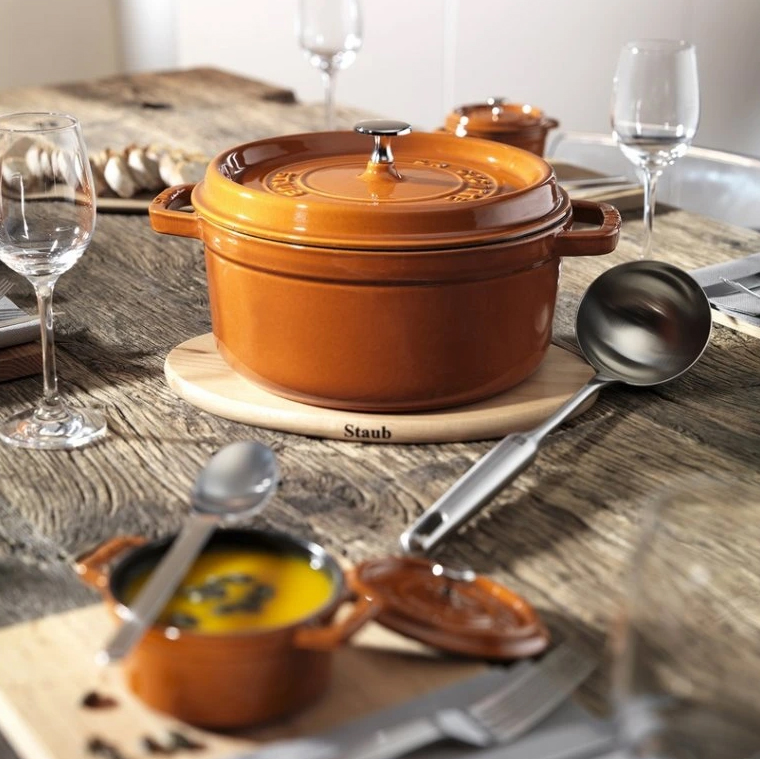
Cooking pot size? Universal! But what does that mean?
- For 1–2 people, a 2–3 litre cooking pot is ideal.
- For the average family, a volume of around 5 litres is ideal.
- If you often host more people or like to cook broths or other bulkier dishes, reach for a cooking pot with a volume of 7 litres or more.
Most popular classic cast iron cooking pots based on our customers' reviews
Our tip
Read also

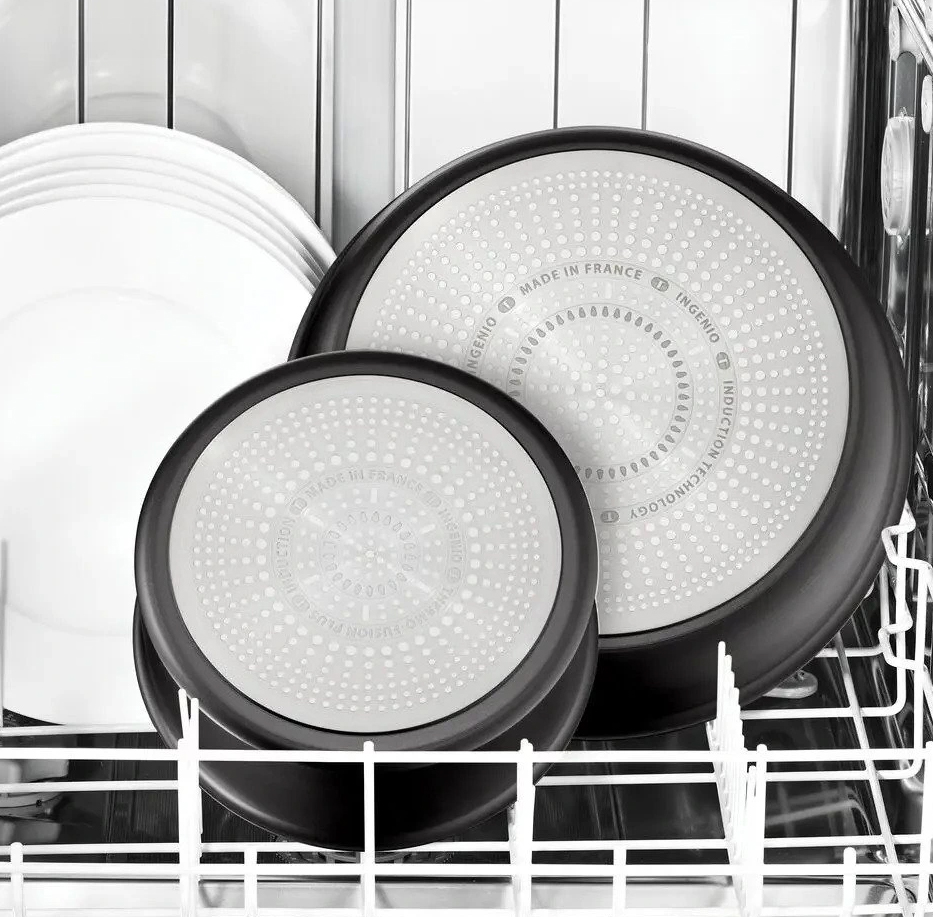
What cookware can be washed in the dishwasher?
It's probably clear to you that not all cookware is suitable for dishwashers. Some materials may be damaged, lose their functionality, or simply are not designed for automatic washing. We'll advise you on which dishes are safe to wash in the dishwasher and which ones to watch out for.
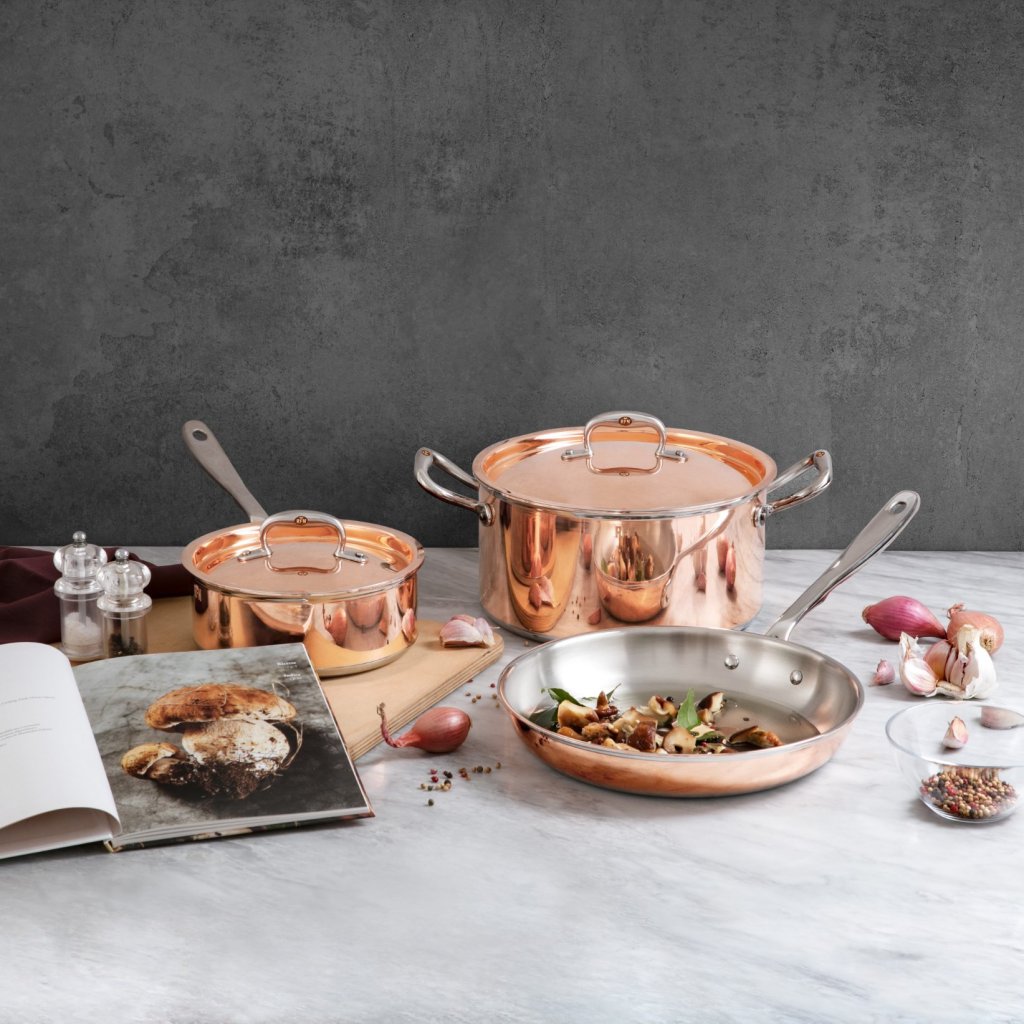
Which pot lid should I choose? Not only the material, but also the details matter
Glass pot lid
- A great choice if you want to keep an eye on your food – you can see inside without having to lift the pot lid, which is especially useful for slow cooking, stewing or reducing sauces.
- Bear in mind that glass pot lids tend to be heavier, more fragile and less suitable for oven use – especially if they have a plastic or silicone handle.
- Durable, lighter and suitable for oven use, often at high temperatures. Ideal for those who use the cooking pot not only on the hob, but also for baking or roasting.
- The disadvantage is that you can't see inside – every time you lift the pot lid, heat and steam escape, which can slow down cooking.
- Some pot lids – glass and metal – are equipped with a vent to regulate steam release. This reduces the risk of overflowing and helps maintain a stable pressure inside the pot. The vent can be either automatic (constant ventilation) or adjustable.
- Ideal when cooking rice, potatoes or thick sauces.
- The shape itself is also important. Flat pot lids allow for stacking or placing on the work surface.
- Domed pot lids provide more space above the food – ideal for stewing larger cuts of meat or whole portions of vegetables.
- A good quality pot lid should fit snugly and evenly on the cooking pot, otherwise you lose energy and cooking is less efficient.
Most popular pot lids based on our customers' reviews

Tips to make your decision easier:
- Watch out for plastic and wooden handles if you want to use the cooking pot in the oven too – they can only withstand limited temperatures. Consider cooking pots with detachable handles.
- The internal measuring scale is a useful tool that means you won't have to pick up a measuring cup.
- Cooking pot in the dishwasher? Find out in advance – not every material or surface finish can handle it.
- Non-stick surfaces aren't common on classic cooking pots. However, if you cook a lot of porridge or roux, it can be a great advantage.

Why buy more than one cooking pot?
Each cooking pot has its use. Although a classic cooking pot is versatile, it's not ideal to cook pasta, soup, sauce and stock in the same cookware. Create your own home "pot collection" according to your cooking style – we also offer practical sets that will save you money and space in the kitchen.
Want to avoid disappointment?
Invest in quality. Pots from renowned manufacturers last for years, often decades. Plus, they offer safety regarding the materials used, energy savings and precise results every time you cook.
Most popular non-stick cooking pots according to our customers
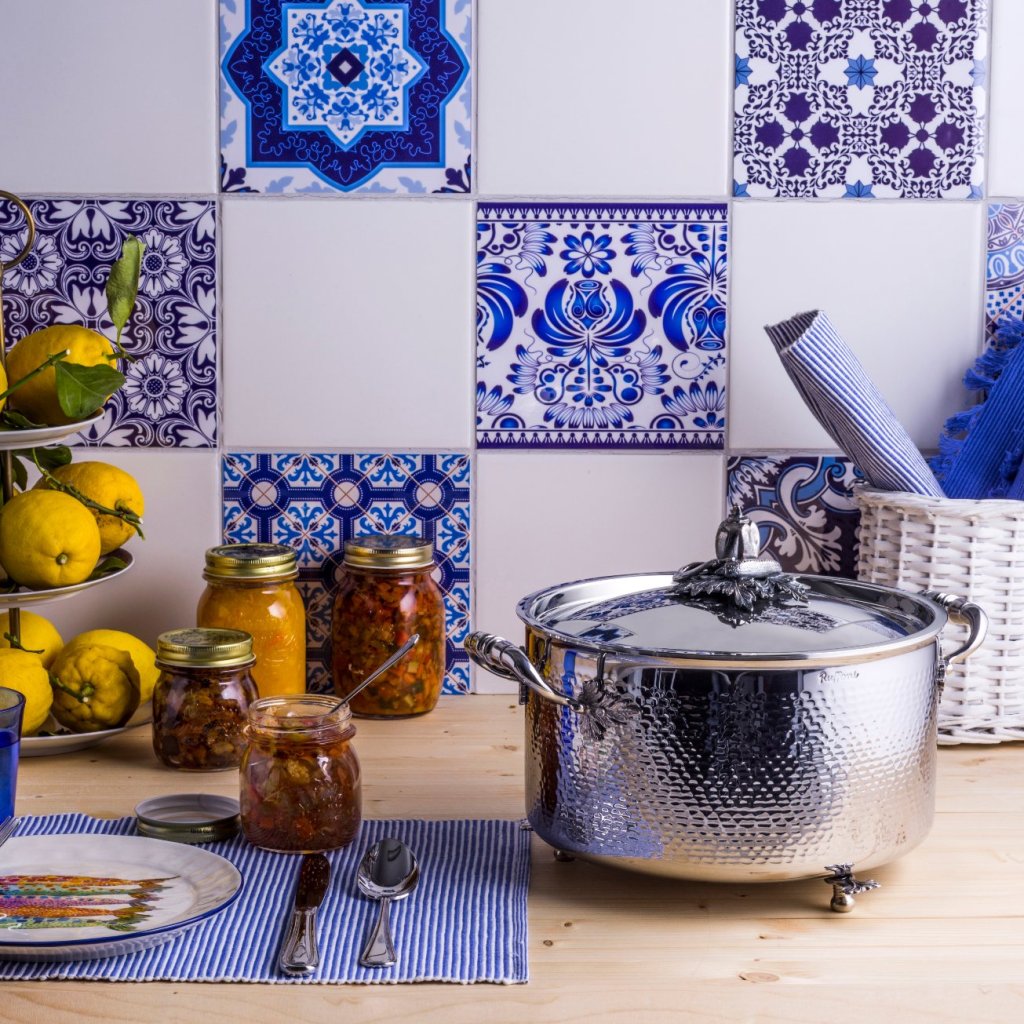
Top brands for classic cooking pots
If you're looking for a cooking pot that will last for years and stand up to everyday cooking, bet on brands that are among the best:
De Buyer – French classic with precise workmanship and robust construction. A great choice for demanding cooks.
Staub – Elegant cast iron cooking pots for slow cooking and stylish serving.
Fissler – German quality with an emphasis on ergonomics, efficiency and practical details.
Eva Solo – Lightness, functionality and Scandinavian design in one. For those who want beautiful and smart cookware.
De Buyer – French classic with precise workmanship and robust construction. A great choice for demanding cooks.
Staub – Elegant cast iron cooking pots for slow cooking and stylish serving.
Fissler – German quality with an emphasis on ergonomics, efficiency and practical details.
Eva Solo – Lightness, functionality and Scandinavian design in one. For those who want beautiful and smart cookware.
Most popular classic copper cooking pots based on our customers' reviews
FAQ
Most frequently asked questions
Which cooking pot is best for induction?
The one with a magnetic base, or rather, marked as "suitable for induction". Most often it is a stainless steel cooking pot with a sandwich base, but this is not a rule.
What is the most versatile cooking pot size?
For everyday cooking, we recommend a cooking pot with a volume of 4–5 litres. Suitable for soups and pasta.
Can I put a classic cooking pot in the oven?
Yes, if it does not have plastic parts or if they are temperature resistant. All-stainless steel or cast iron cooking pots with a metal lid are more suitable.
Why does food stick to some cooking pots?
The culprit is often a thin base or poor-quality material that conducts heat unevenly. Using the correct technique can also help – always heat the cooking pot and warm the fat in it before adding the ingredients.
Is it worth considering the base thickness of a cooking pot?
Yes. A thicker base distributes heat better and prevents burning, especially when slow cooking. A thin base can overheat in the centre and cook unevenly. A sandwich or multi-layer base is ideal.