Customer support:partner@kulina.com

Flambé pans: Which material to choose and how to flambé correctly?

flambování

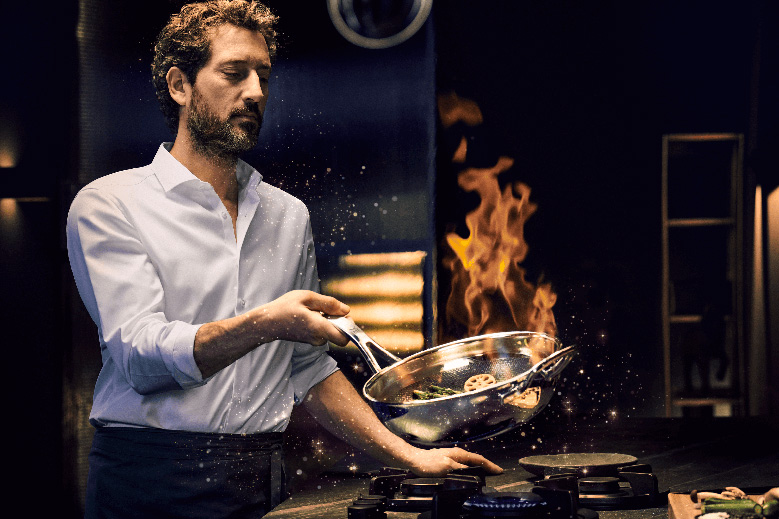
Did you know that flambéing can add a whole new dimension to your dishes? Learn how to flambé correctly and, above all, safely.

What is flambéing and why do it?

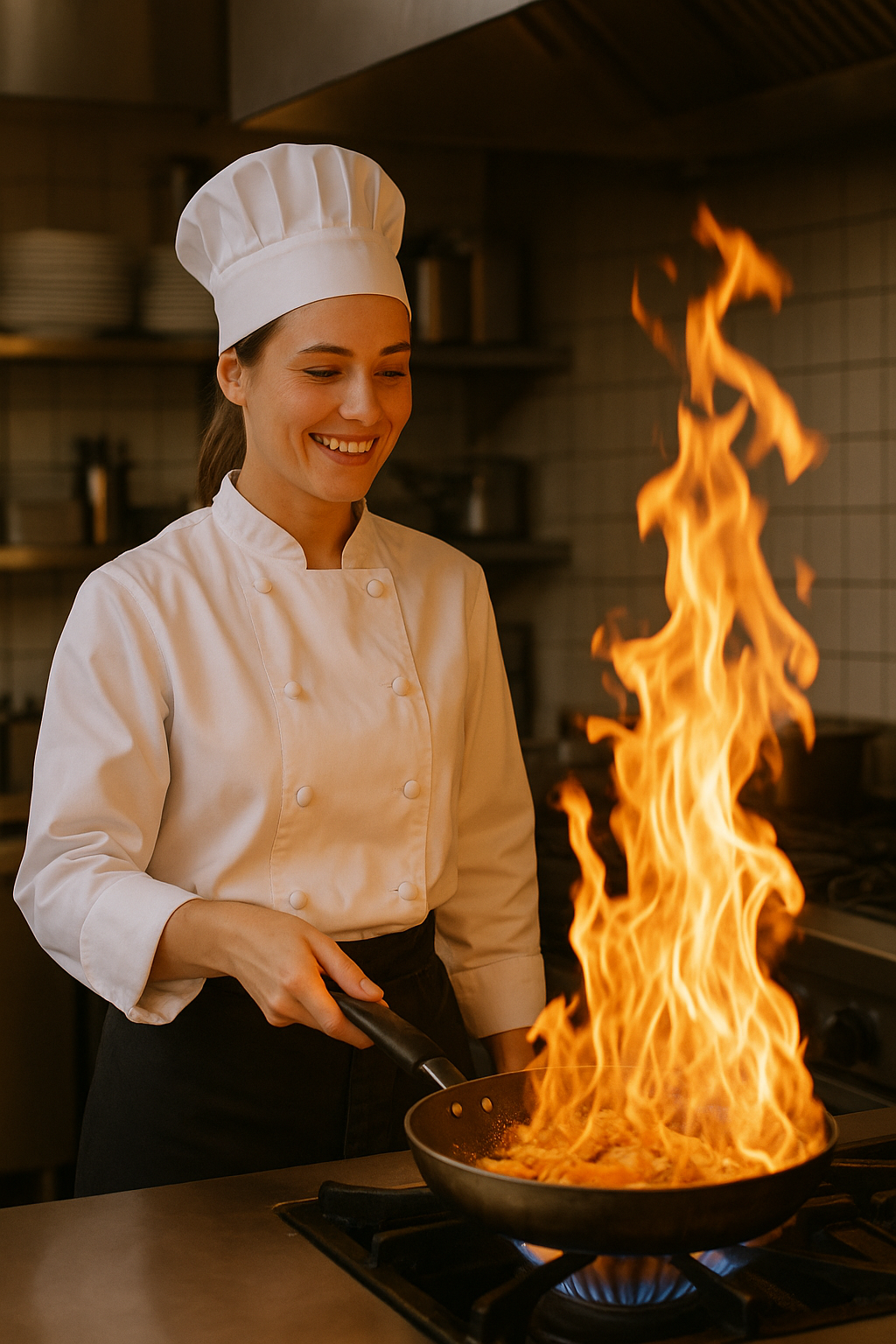
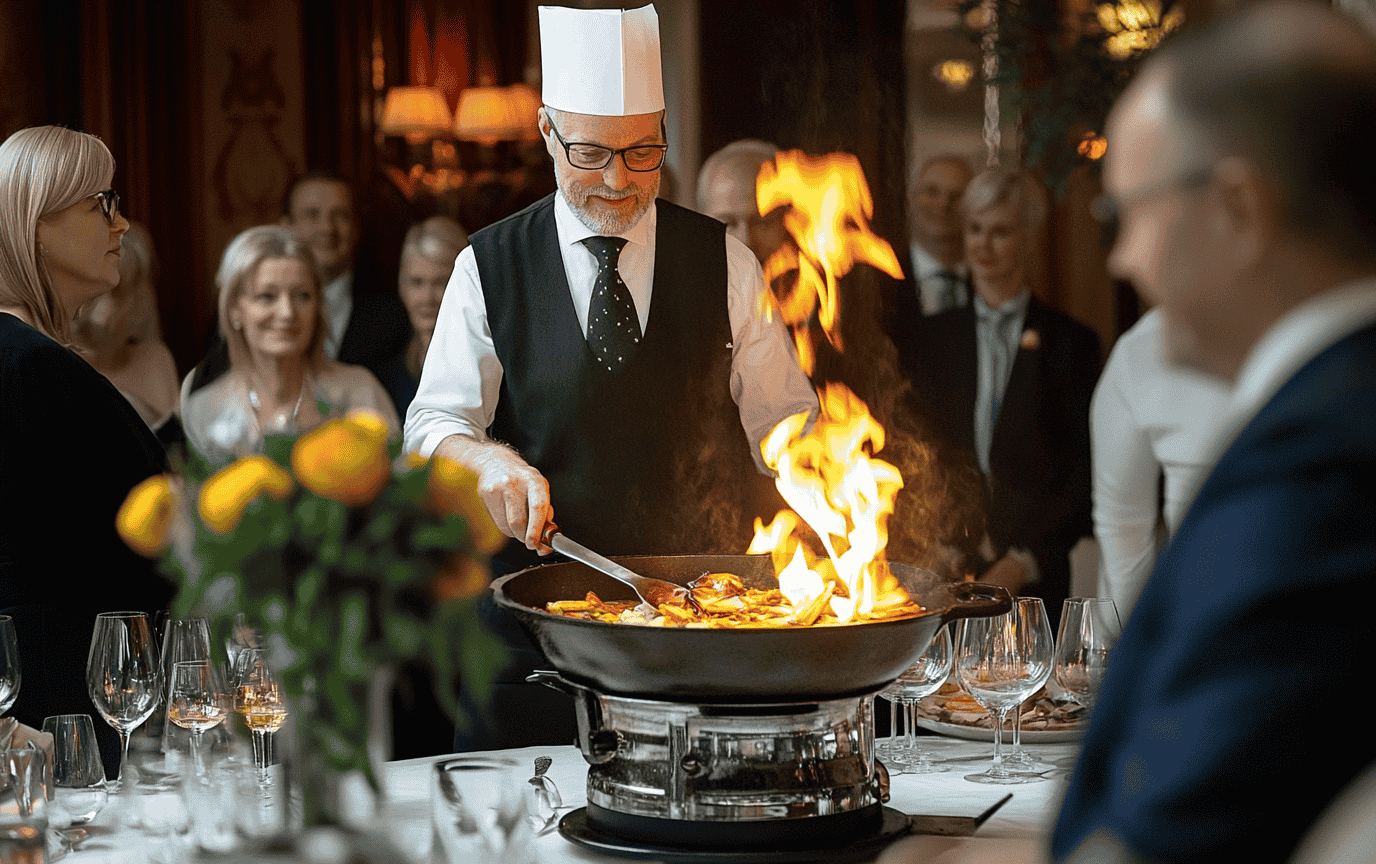
The term flambéing comes from the French word 'flamber', meaning 'to flame', and in short, it means adding alcohol to food, igniting it, and letting it burn off. Why? Because it looks great and adds to the appearance and taste of the food. The flames burn off most of the alcohol, but retain traces of its flavours and aromas – drawing out the sweetness from rum, for example, and subtle fruity notes from brandy. And it's also a bit of a show, let's face it.
Pans

Which pan should you choose for flambéing?

Not every pan is ideal for flambéing. You need a pan that can handle high heat, heats up quickly and is safe. At the same time, you need to avoid surfaces that cannot withstand high temperatures. Here are the best options:

1. Steel pan

Carbon steel is comparable to cast iron in many ways, has a naturally non-stick surface (when treated well), but is lighter and reacts more quickly to temperature changes. It is ideal for meat and vegetables where you want a good seared crust.

Steel pans

Nadpis blok s obrázkem VPRAVO


The best steel pans according to our customers' ratings


Nadpis blok s obrázkem VLEVO

2. Stainless steel pan

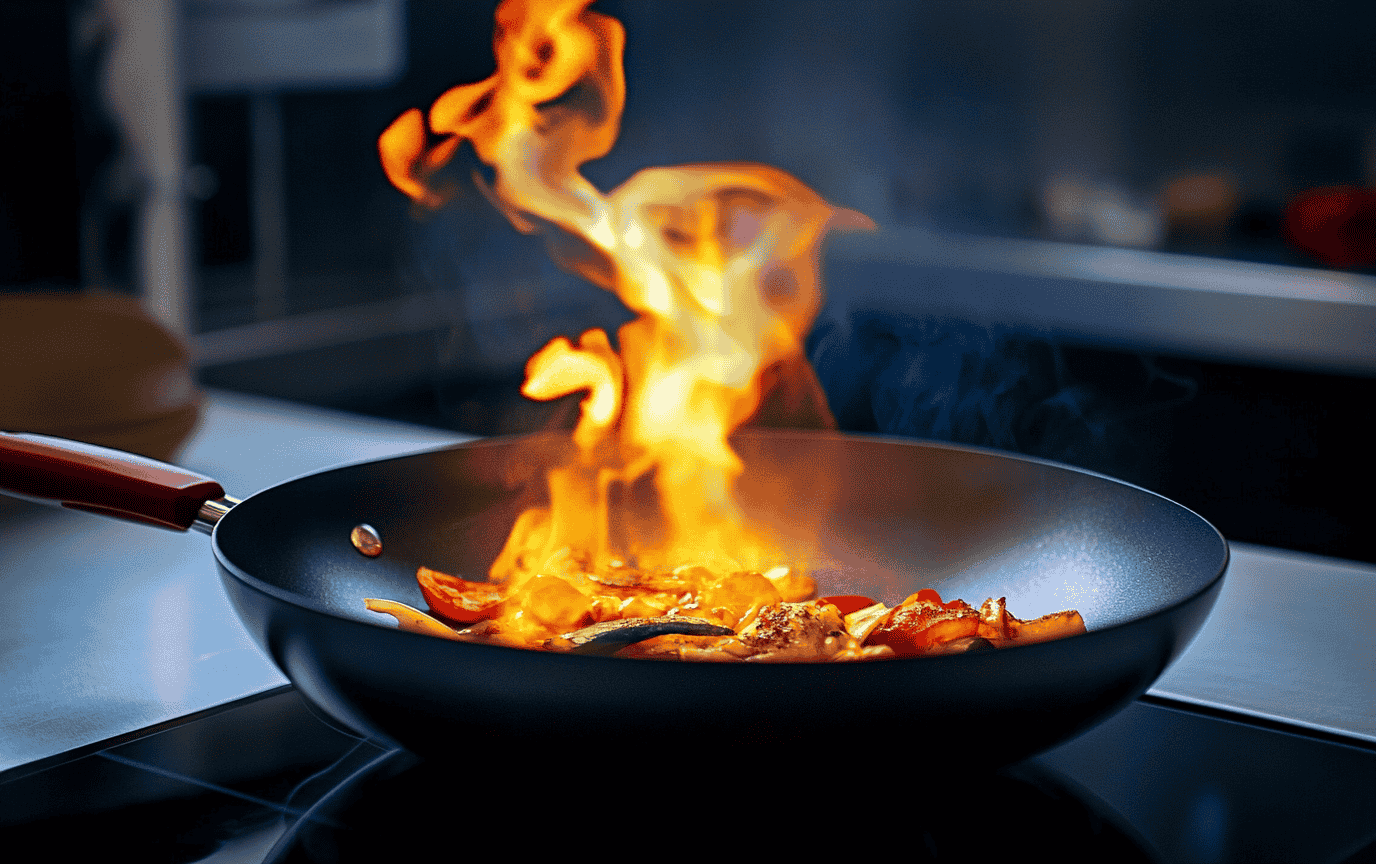
A stainless steel pan is a classic choice that won't let you down. It conducts heat brilliantly and, most importantly, doesn't react with any ingredients. If you're flambéing dishes with tomatoes or other acidic ingredients, stainless steel is the best option. Plus, it's easy to clean as it's also dishwasher safe.

Stainless Steel Frying Pans

High-quality stainless steel pans


3. Cast iron pan

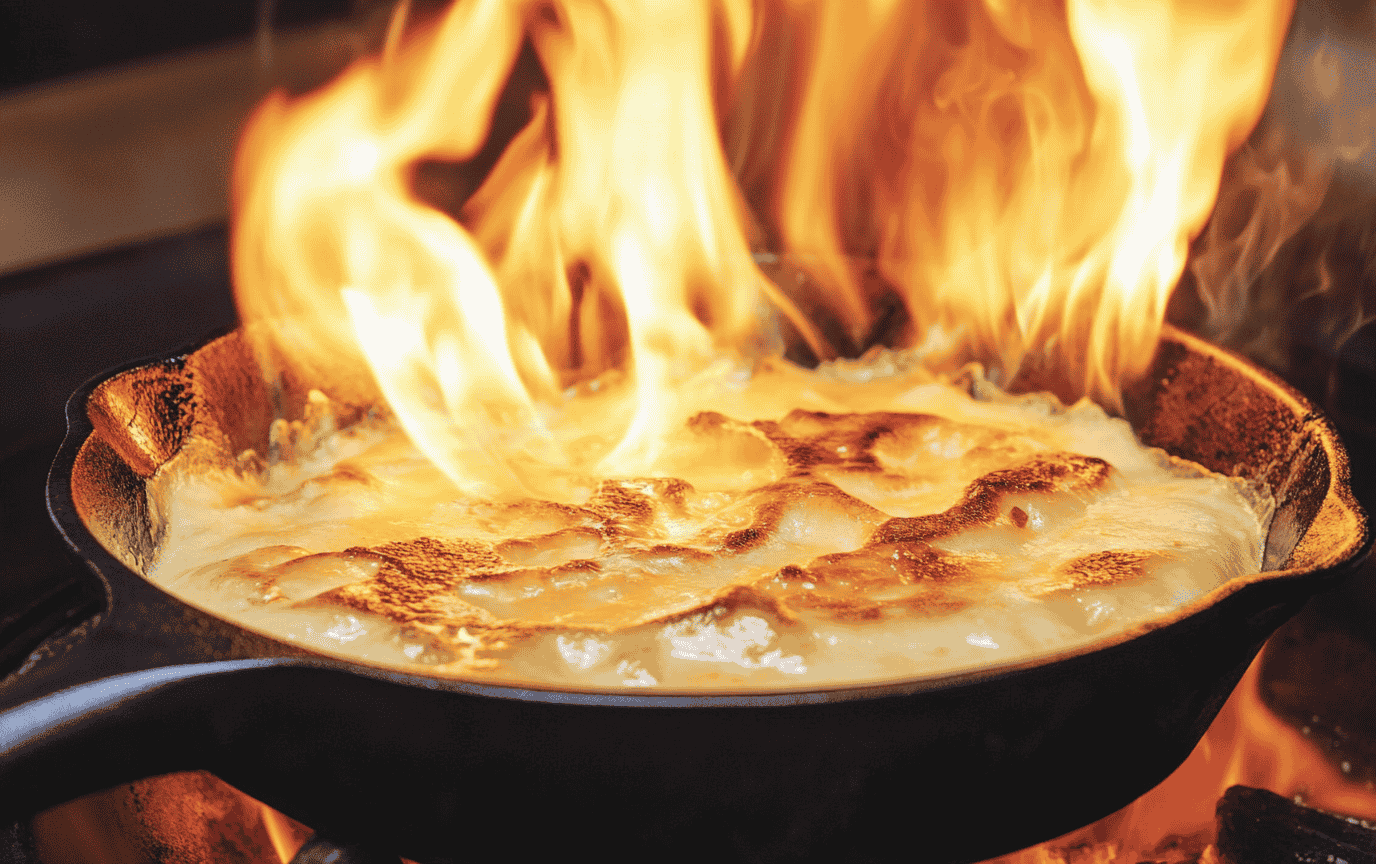
If you want something that lasts forever, cast iron is the obvious choice. It retains heat like no other pan, making it ideal for longer, slower cooking. It can also easily withstand really high temperatures and is ideal for cooking over a fire, so it can easily handle flambéing.

Cast iron pans

Nadpis blok s obrázkem VPRAVO


Cast iron pans for life


Nadpis blok s obrázkem VLEVO

4. Copper pan

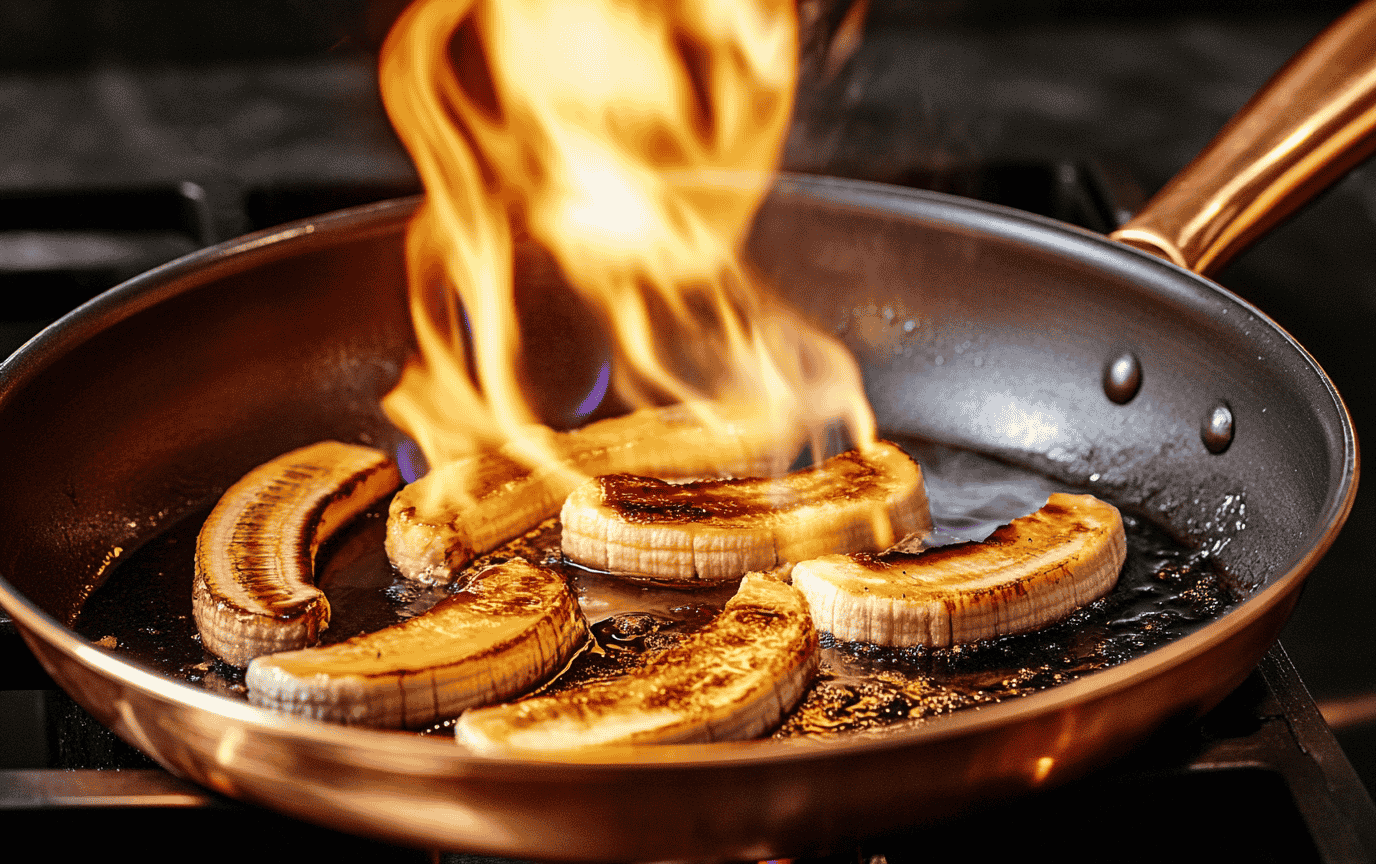
Want to flambé in style? Not only does the Copper pan look great, it also reacts quickly to temperature changes. Perfect if you're a stickler for detail. On the other hand, copper is more expensive and needs more care to stay beautiful. But it won't let you down when flambéing.

Copper Frying Pans

Elegant Copper Pans


flambee
Step-by-step guide
How to Flambé

You'll soon discover that flambéing isn't rocket science. However, it's worth knowing the correct procedures to ensure a perfect result and avoid any unnecessary hassles:

  1. Prepare everything in advance:
    Alcohol, lighter, ingredients, pot lid – have everything to hand, because flambéing is quick.
  2. Heat the pan with the ingredients:
    Meat, vegetables, fruit – everything you flambé needs to be hot so the alcohol ignites well, but not boiling, so the alcohol doesn't start to evaporate prematurely. Remove the pan from the heat source
  3. Add alcohol:
    Use a spirit with an alcohol content ideally around 40% – rum, cognac, whisky, brandy. A little is enough, even 20 – 30 ml. It is also a good idea to heat the alcohol to around 50°C before adding it to the dish.
  4. Ignite:
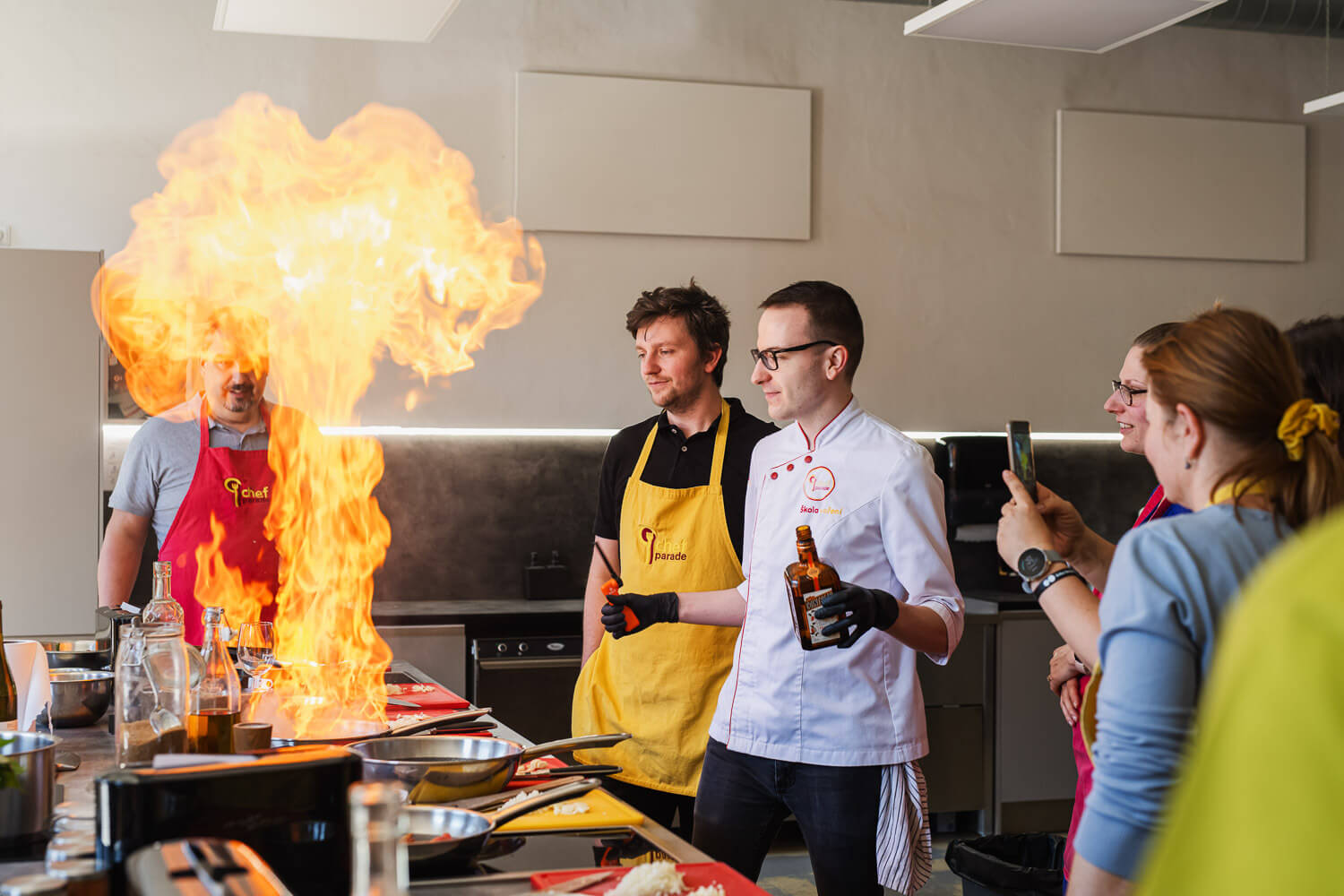
    Use a long match or a lighter and bring the flame close to the surface of the alcohol. If you have a gas stove, you can tilt the pan slightly towards the flame, which will ignite the alcohol, or rather the alcohol vapours.
  5. Let the flames do their work:
    The flames usually go out within a few seconds, once most of the alcohol has burned off.
Pans

Safety when flambéing

Now, seriously: flambéing is a great technique, but you are literally playing with fire. That's why it's important to know and follow a few safety rules to prevent the kitchen show from turning into a disaster:
  • Turn off the extractor fan: You don't want flames in the extractor hood!
  • Remove flammable objects from the vicinity: No tissues or alcohol bottles nearby.
  • Use cookware with a long handle: For safe handling of the burning dish, a pan with a longer handle is suitable, allowing you to keep your hands at a safe distance from the flames.
  • Choose sufficiently deep cookware: Deeper pans or pots help keep the flames under control and minimise the risk of spilling burning alcohol.
  • Do not use spirits with an alcohol content higher than 60%.
  • Do not pour alcohol into the pan directly from the bottle: Prepare the alcohol in a glass, measuring cup or ladle.
  • Do not move a burning pan.
  • Keep a sufficiently large lid handy: If something goes wrong, cover the pan with the lid and the flames will be smothered.
flambování
What to flambé

Flambéing can elevate many dishes from different categories to a new level, whether savoury or sweet. Try this:

Meat: Beef Stroganoff or duck with orange sauce
Desserts: Crêpes Suzette, Crème brûlée
Fruit: Caramel pineapple, pears with brandy

Pancake pans
Our tip
Read also
->
Image
Fire pans: advice and tips for choosing
Do you, as they say, like to play with fire? Then you'll find tips on pans that can withstand extreme temperatures without any problems.

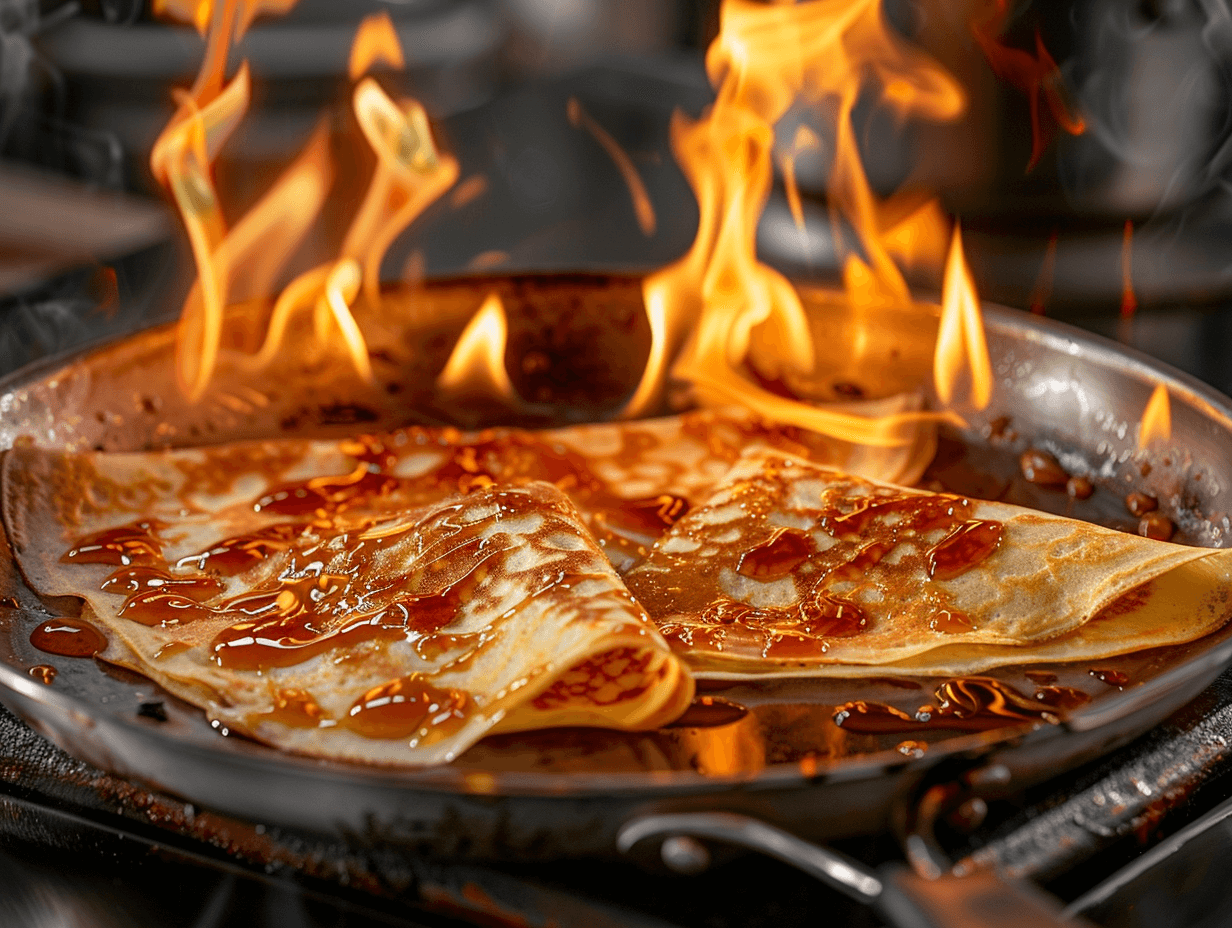
How to make heavenly flambé pancakes?

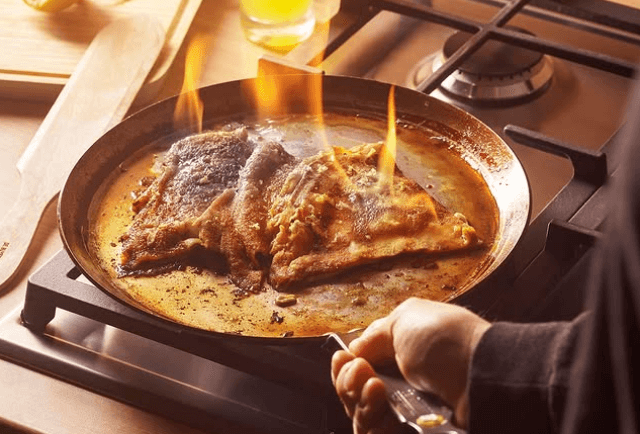
Flambéing is a great way to turn even ordinary food into an extraordinary gourmet experience. Pancakes are perhaps the best-known flambéed dessert. Are you wondering how to further enhance the effect of the flames and aromas? Get inspired by our tips!

  • High-quality alcohol with character – Cognac, rum (ideally dark), calvados or citrus liqueurs such as Grand Marnier or Cointreau are most often used. Before flambéing, it is a good idea to preheat the alcohol slightly, for example in a ladle over a flame, so that it ignites more easily.
  • Citrus freshness – For an even better aroma and flavour, you can add a few drops of lime juice or blood orange juice to the alcohol. They beautifully highlight the fruity line of the entire dessert.
  • Herbs for a subtle aroma – An interesting twist can be achieved by macerating a vanilla pod, rosemary, or thyme in the alcohol for a few days beforehand. The subtle herbal notes will then beautifully complement the sweetness of the pancakes.
  • Caramelised fruit – A great addition is pieces of fruit that you lightly caramelise directly in the pan before flambéing – for example, bananas, pears or apples. The pancakes will then gain another layer of flavour.
  • Nutty butter for a more intense flavour – Let the butter you use to prepare the pancakes brown slightly until it acquires a nutty aroma (known as beurre noisette). It will add a subtly caramel undertone to the dessert.
flambe pancakes
  • Combination of alcohols for a richer aroma – Don't be afraid to experiment and combine different types of alcohol. For example, combining rum with orange liqueur or cognac with a touch of amaretto will create an interesting aromatic effect.
  • A final flourish of spice – Once the flames have died down, you can lightly dust the pancakes with cinnamon, nutmeg, or a pinch of cardamom. The warmth of the pancakes beautifully releases the spices' aromas.
jak flambovat jako profesionál
Summary
Flambé like a pro

Choose the right tools, be careful, and don't be afraid to experiment a little. Flambéing isn't just for professionals – with a little practice and a dash of courage, you can do it at home too. And that wow factor? It's worth it.

Pans