Customer support:partner@kulina.com

Sous-vide: The key to perfectly cooked meat and vegetables

sous vide

Maximum preservation of flavour and nutrients - this is why professional chefs have embraced sous-vide, and today this technique is finding more and more space in home kitchens. In a vacuum, you can easily prepare delicate and often expensive ingredients, such as fish, but also the completely ordinary, i.e. meat and vegetables, exactly as they should be - juicy, tender and full of flavour.

Before you start experimenting, though, we'll advise you on what to focus on when choosing sous-vide tools, and we'll also add a few tips on how to get the most out of this method.

What exactly is sous-vide?

Sous-vide translates to "under vacuum" and refers to slow cooking in a water bath. This is set to a precise temperature, such as 54°C for a medium-rare steak – and the appliance keeps it constant throughout the cooking time. The ingredients are then vacuum-sealed in a bag, which helps to preserve their natural juiciness and flavour.

The result? Meat that literally falls apart under your fork. Vegetables that taste like they're fresh from the garden. And all this without constantly watching the hob.

Who is sous-vide for?

Sous-vide is ideal for anyone who:
  • desires dishes full of flavour and nutrients,
  • wants a consistently perfect result – whether it's delicate salmon, a pink steak, or tender chicken,
  • enjoys preparing delicate ingredients and wants to be sure of a great dish.
Everything for sous-vide

All About Sous Vide Cooking


What Type of Sous Vide Appliance Should You Choose?

When selecting a sous vide device, you can go two ways - depending on how much space you have in the kitchen, how often you plan to cook, and whether you want everything in one.

hrnec sous vide
Standalone Sous Vide Cooking Pots

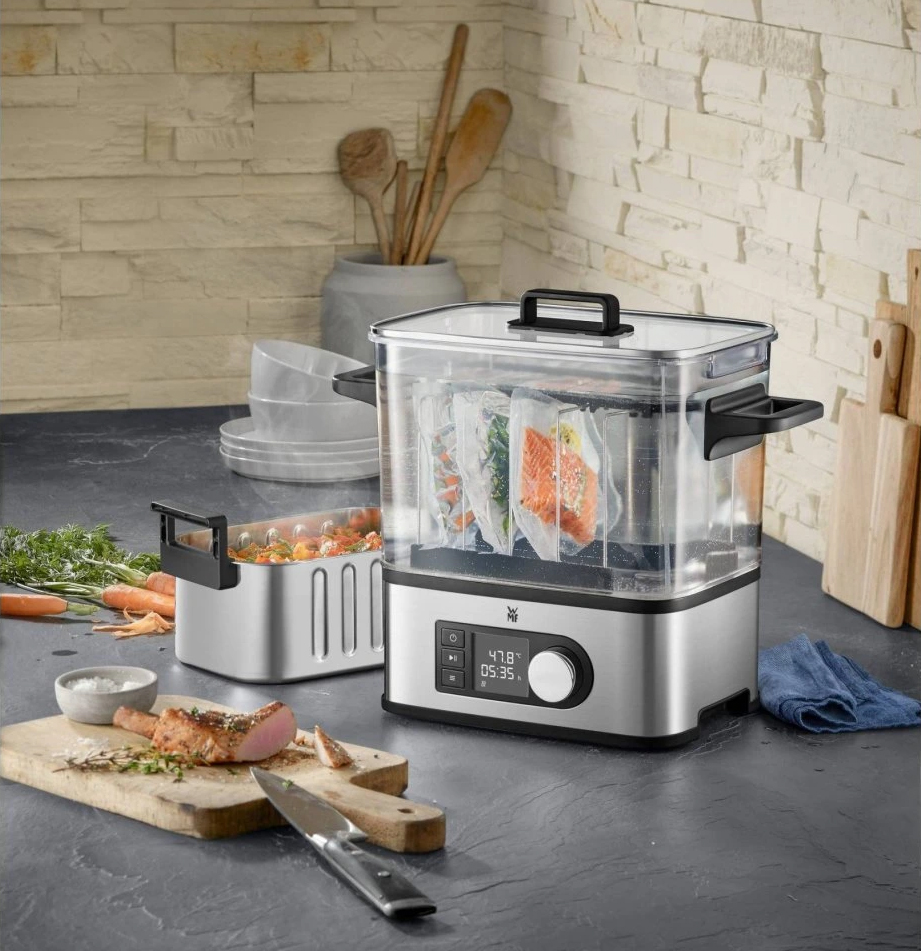
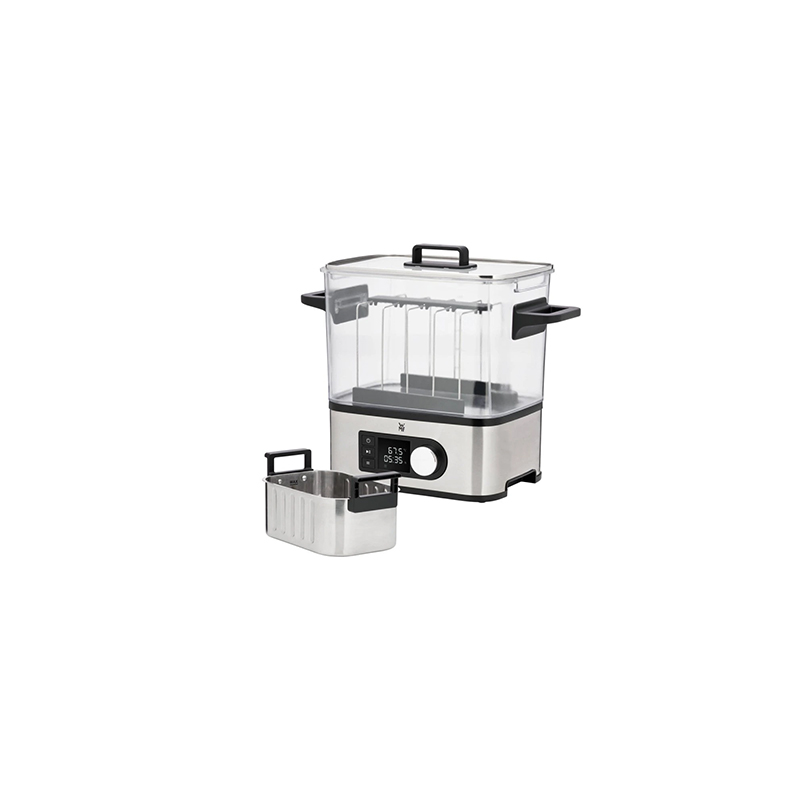
These appliances have their own container, heating, and circulation system. Just plug them in, fill them with water, add the ingredients, and start the program.

They’re ideal for those who want maximum convenience – you don’t have to look for a suitable cooking pot, worry about a lid, or water circulation. Everything is prepared and designed to work right out of the box.

  • Convenient all-in-one solution
  • Ideal for regular home cooking
  • No additional accessories required
  • However, they take up more space in the kitchen
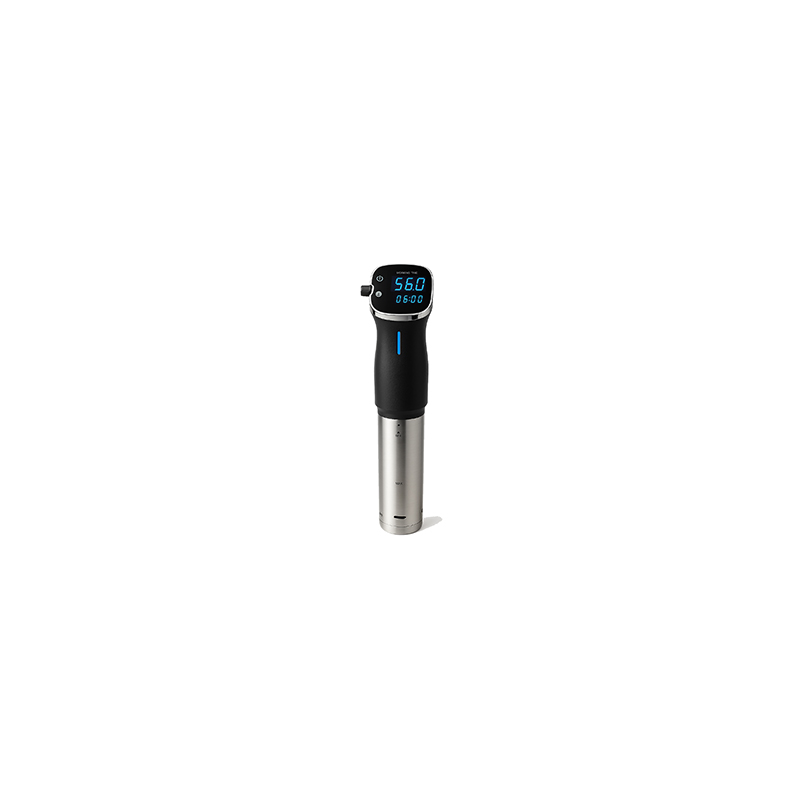
sous vide cirkulator
Sous vide circulators

These are compact devices that you immerse in your own pot of water. The circulator heats the water and keeps it moving to ensure an even temperature throughout the container.

This option is ideal if you have limited space in the kitchen or want to try sous vide first. It's easy to store, transport, and often more affordable.

  • Compact and lightweight
  • Flexible – use the cooking pot you already have
  • Excellent value for money
  • However, it requires a suitable container and possibly a lid
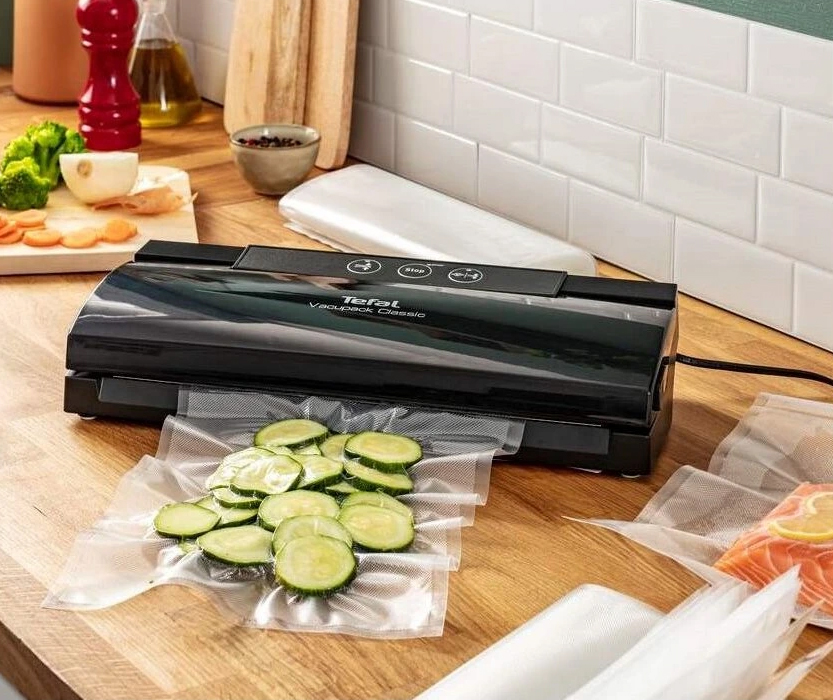
vakuovacky
What else will you need for sous-vide?
  • Vacuum sealing is essential
    Sous-vide requires the ingredients to be airtight. A vacuum sealer and bags specifically designed for sous-vide are ideal. However, for occasional cooking, zip-lock bags and the so-called water displacement method (pushing out the air by submerging) can be used.
  • Bags suitable for heat
    Only use strong, heat-resistant bags that are safe for cooking. Ordinary food bags are not suitable as they may become deformed or release harmful substances.
  • Water bath container
    A standard deeper cooking pot or a plastic container suitable for hot water will suffice. It’s important that it has sufficient volume and allows water to flow freely around the bags.
  • Accessories to make cooking easier
    • A rack – keeps the bags submerged and separated.
    • Pot lid or insulation balls – reduce water evaporation.
    • Clips or weights – help to keep the bags submerged.
Vacuum sealers and other accessories
Our tip
Read also
->
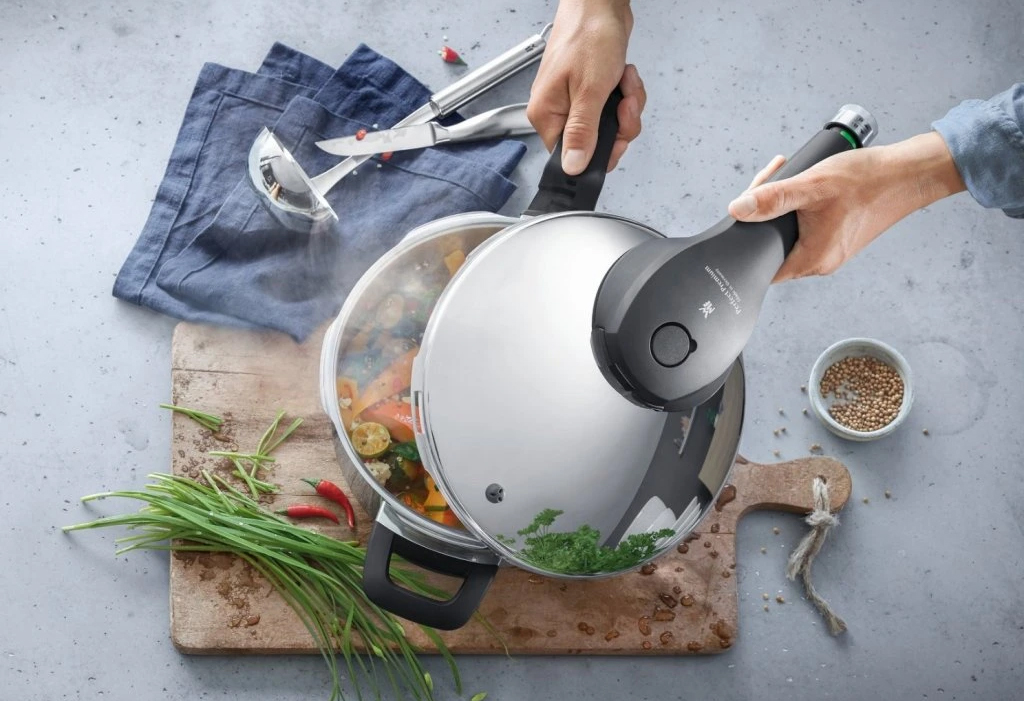
tlakovy hrnec
Pressure Cooker: Extra Utensil or a Must-Have for Quick Cooking?
Saving time and energy – these are the two main reasons to buy a pressure cooker. In reality, there are many more...
sous vide vareni
6 Tips
How to cook using the sous-vide method
  1. Prepare your ingredients in advance
    Vacuum-pack the meat, fish, or vegetables a day in advance and store in the fridge. You can then manage the cooking when it suits you.
  2. Vacuum sealing is essential
    A vacuum sealer and quality bags are ideal. In an emergency, you can use zip-lock bags and the so-called water displacement method.
  3. An ordinary cooking pot is sufficient
    You can use the circulator in any deeper pot. It’s important that it has enough water and space for all the bags.
  4. Keep the bags submerged
    Clips, a rack, or even a ceramic spoon as a weight will help. Submersion is important for even cooking.
  5. Cooking takes longer, but it's worry-free
    Meat for 1–4 hours, eggs for around an hour, vegetables for longer. But the circulator works on its own – without stirring or watching.
  6. Briefly sear the meat after cooking
    Finally, sear the meat in a pan or on a grill. A crust will form, complementing the delicate texture and flavour.
Everything for sous-vide
FAQ
Most frequently asked questions
Do I need to buy a special sous-vide cooking pot?
You don't have to. If you purchase a circulator, a regular, deeper cooking pot or another heat-resistant container will suffice. Special 'sous-vide cooking pots' are more of a convenient 'all-in-one' alternative, but not a necessity.
Why is a circulator needed? Isn't it enough to keep the water warm on the hob?
The hob cannot maintain a stable and precise temperature for a long period of time. The circulator not only heats the water to a tenth of a degree, but also constantly mixes it to ensure the temperature is even throughout the cooking pot. This is precisely what makes the results so predictable and professional.
What all can I prepare using the sous vide method?
The classics are steaks, fish, poultry, or eggs, but sous vide is also great for vegetables, sauces, homemade yoghurt, or desserts. The possibilities are much broader than they seem at first glance.
Is a vacuum sealer necessary?
For the best results, yes – vacuum sealing helps keep the ingredients submerged and without air exposure. However, if you're just starting out, you can also use resealable zip bags and push the air out using the water displacement method.
Is sous-vide healthy?
Yes. Cooking at low temperatures preserves more nutrients and flavour compounds. And because you don't need fat for frying, it's also gentler on the body and ingredients.