.png)
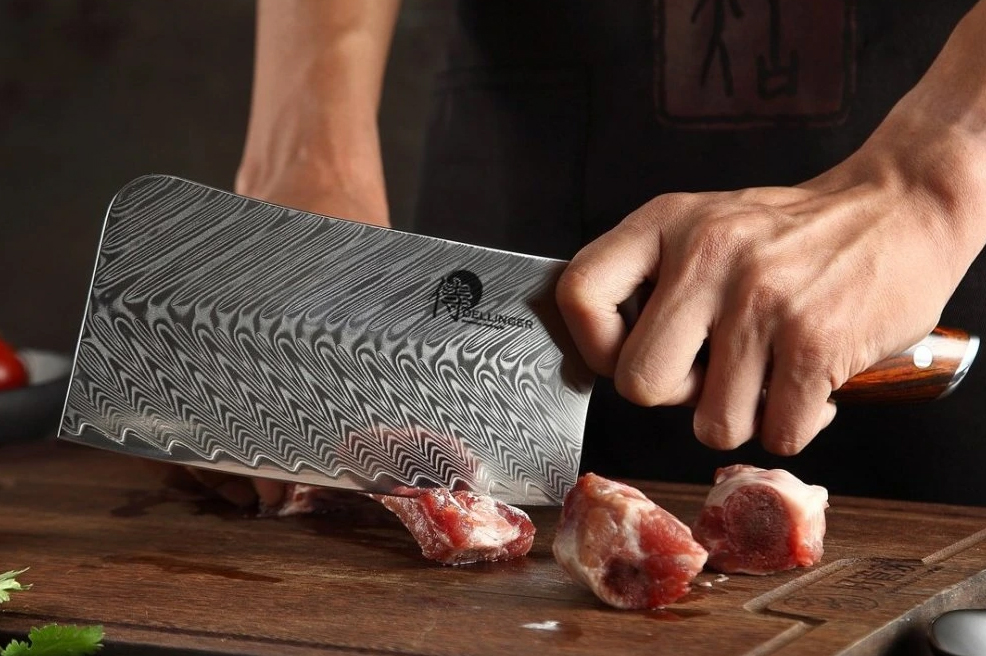
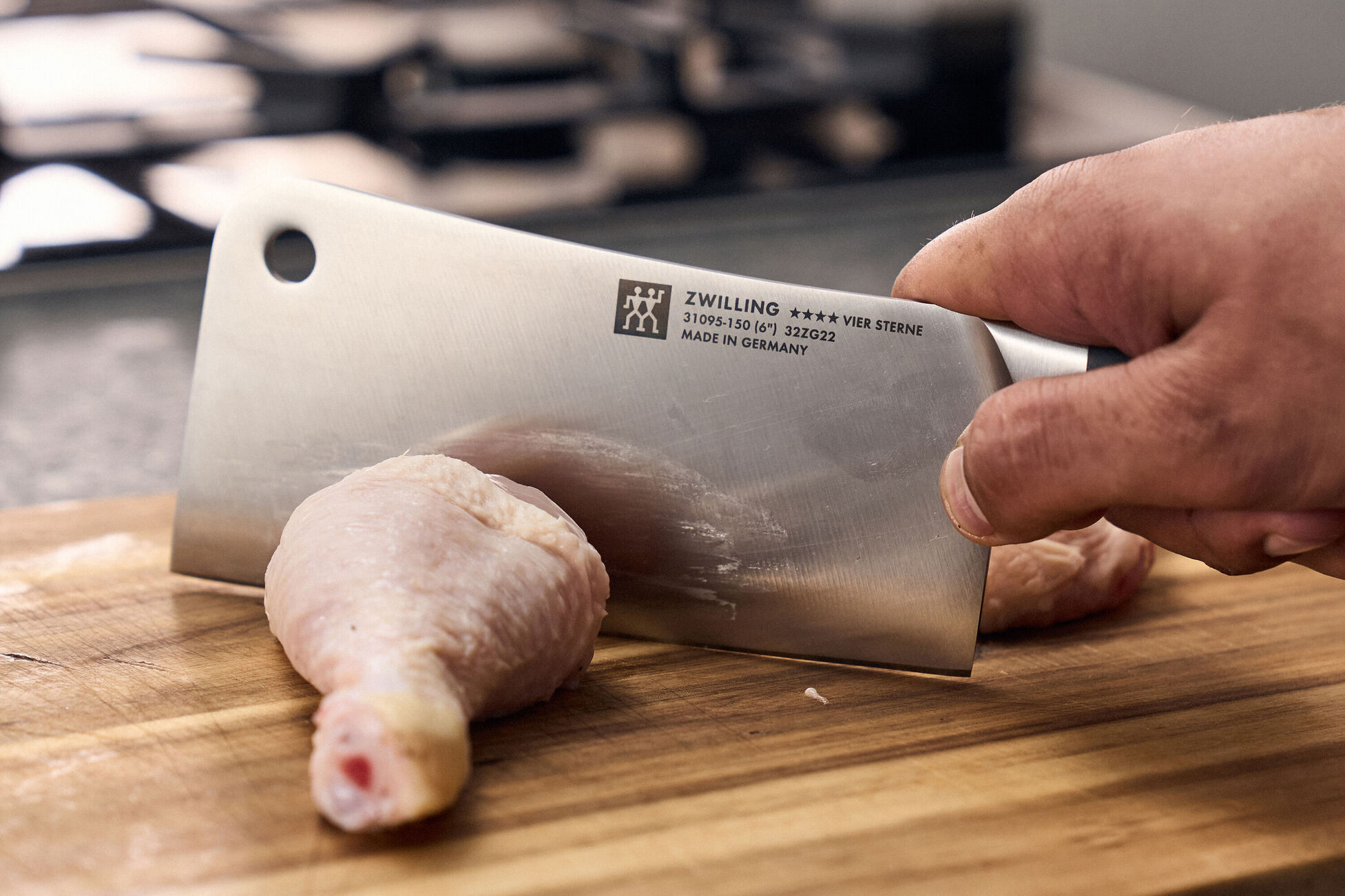
When it comes to cutting meat and chopping bones, a regular knife is not enough and this is where the cleaver comes in. Its wide and heavy blade makes it easy to cut ingredients without exerting unnecessary force, and the perfectly balanced ergonomic handle ensures a comfortable grip and safe handling.
What makes the meat cleaver special
Unlike other kitchen knives the chopper is designed to combine strength and stability with an edge sharp enough to allow clean cuts without excessive fiber shredding. It has several distinctive features:
- Wide and heavy blade - ideal for precise cutting and chopping of ingredients that a conventional knife would not be able to handle.
- Straight edge - allows efficient force transfer when chopping bones and tough meat and eliminates incomplete cuts.
- Balanced design - provides stability and control with every cut.
- Sturdy and ergonomic handle - ensures a secure grip even when working with high force.
Quality meat cleavers
How to choose the right meat cleaver?
When choosing a chopper, it is important to consider several key factors:
Size and weight:
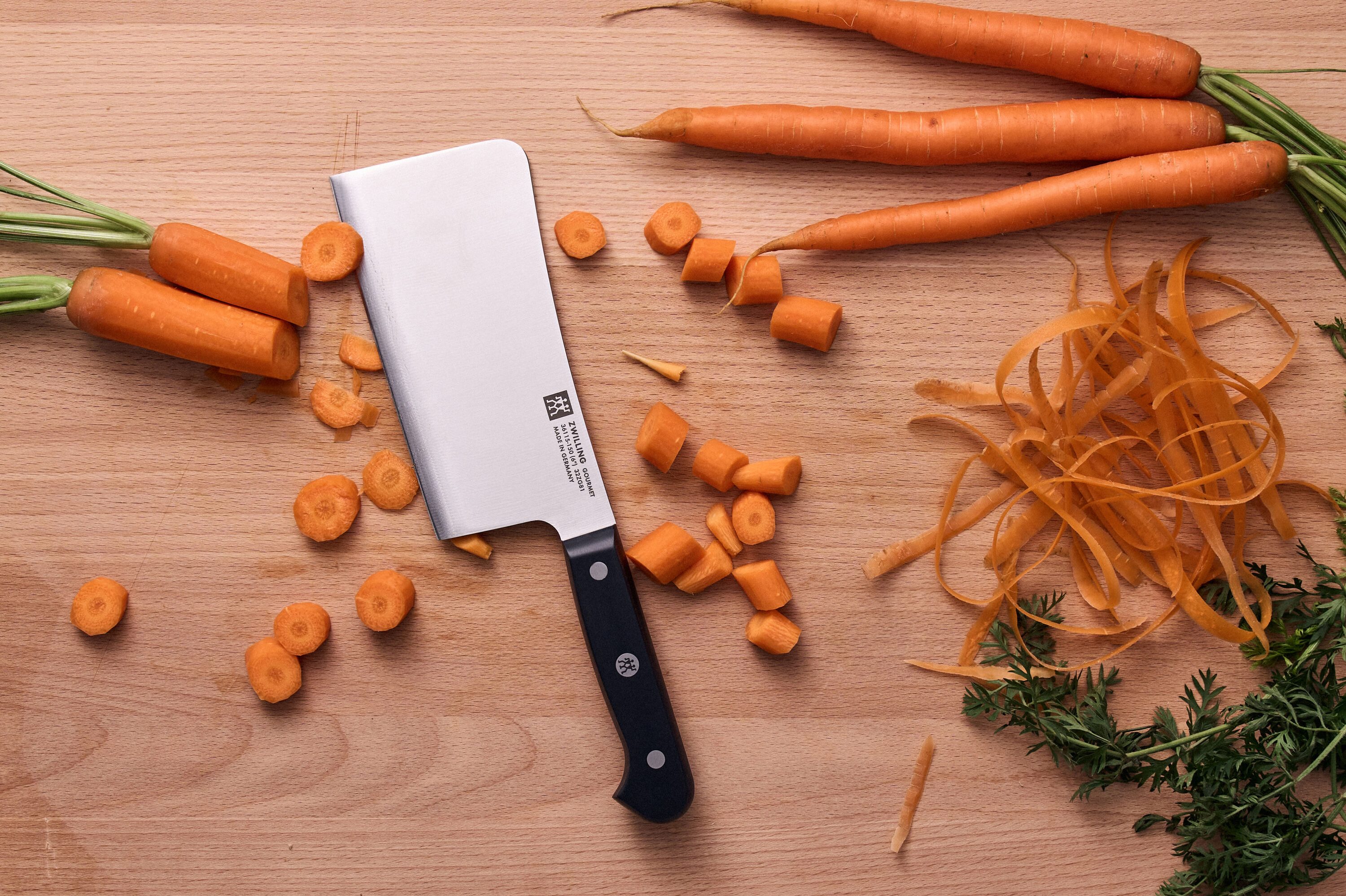
Smaller choppers (15-18 cm) are suitable for more precise work, for example for cutting poultry or smaller pieces of meat. The more robust models (20 cm or more) provide more power when chopping bones and hard materials.
Blade material:
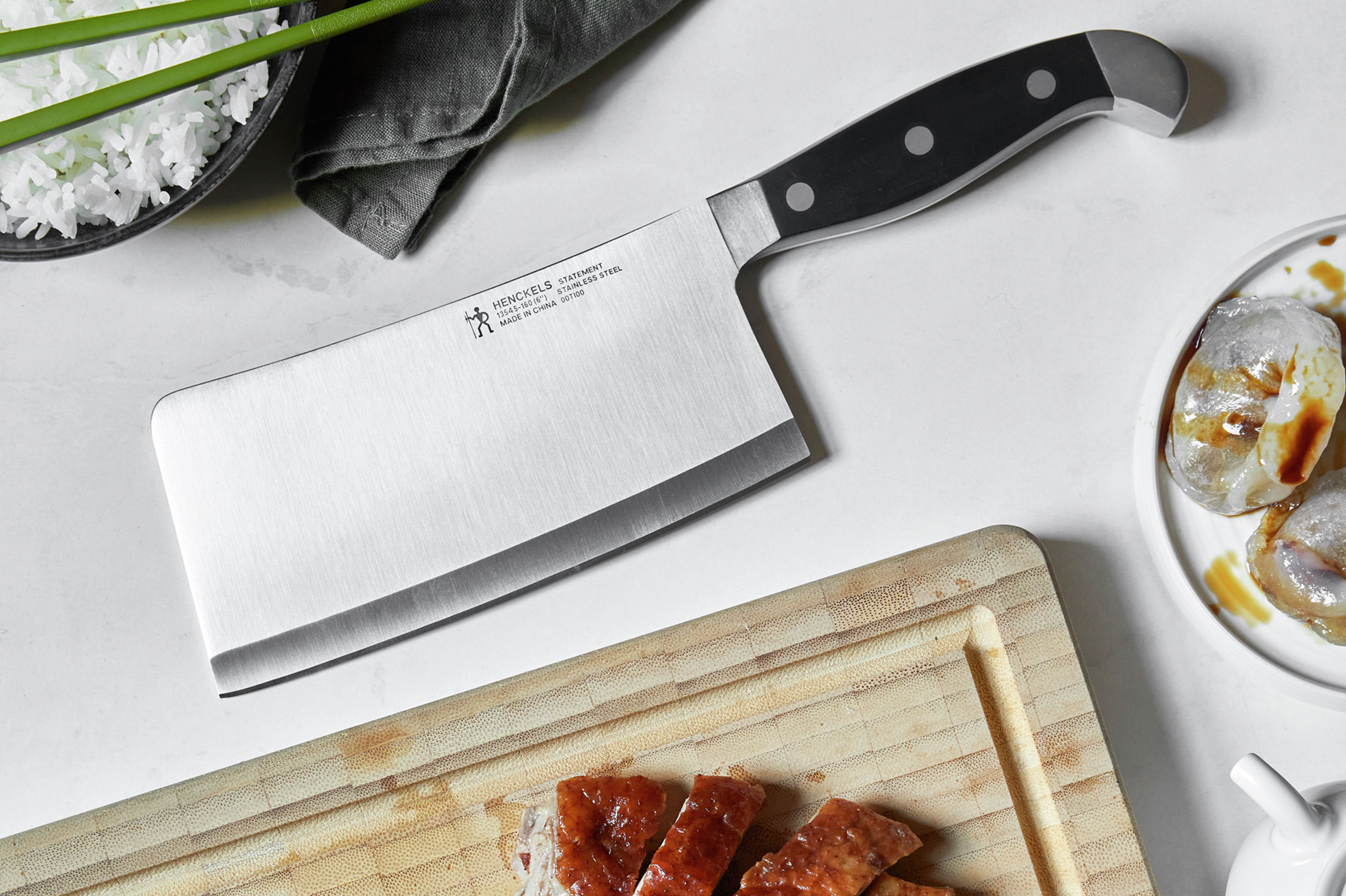
High-quality stainless steel ensures long life and easy maintenance, while higher carbon blades offer better sharpness but require regular care.
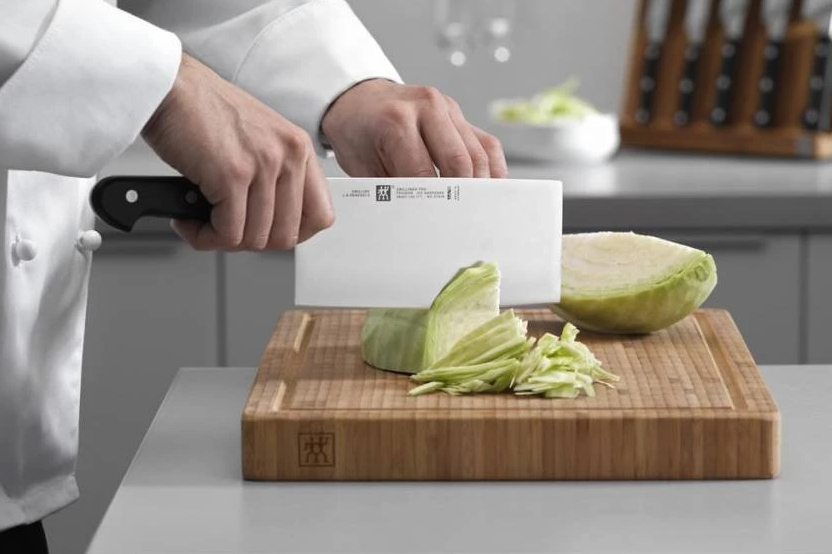
Blade shape:
Some cleavers have a more curved blade for smoother slicing, while straight models are more effective for power cuts.
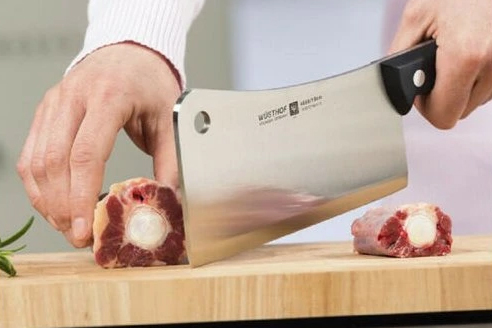
Handle type:
The wooden handle brings a traditional look and comfortable grip, while modern composite materials or stainless steel offer greater durability and easier maintenance.
Our tip
Read also

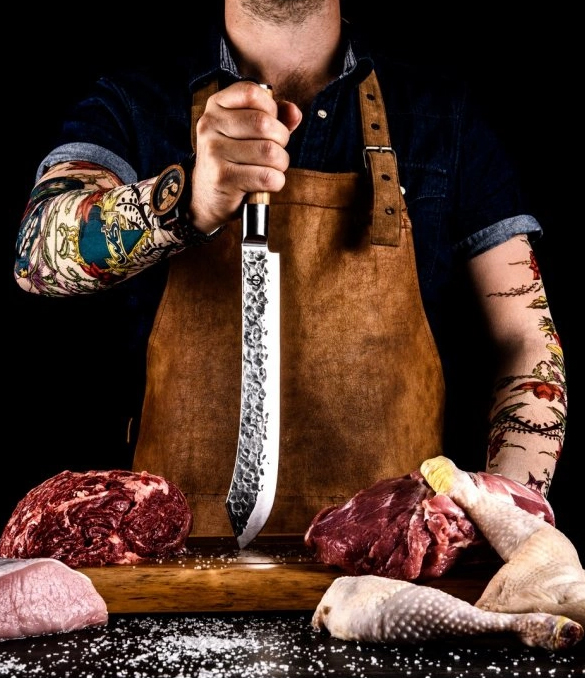
Everything you need to know about meat knives
If you are a keen cook, meat knives should not be missing from your equipment. Read all about them.
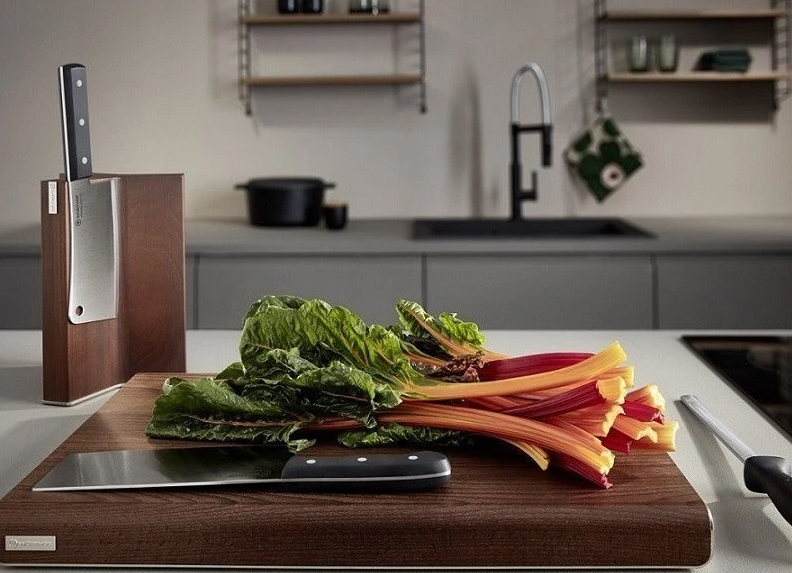
4 steps:
How to care for a meat cleaver
To ensure that your meat cleaver lasts for many years in perfect condition, it is important to follow a few simple principles:
- Use the correct cutting board - ideally wooden or plastic to avoid damage to the blade.
- Do not wash in the dishwasher - hand washing and instant drying will help extend the life.
- Sharpen regularly - because a cleaver does the hardest work in the kitchen, its blade wears out faster than a regular knife. Regular sharpeningSo is more than important.
- Store safely - ideally in knife block, on a magnetic bar or in a protective sheath to avoid dulling or damaging the blade.
The best whetstones and sharpeners according to our customer reviews
FAQ
The most frequently asked question
How often do I need to sharpen the chisel?
It is a good idea to sharpen the chopper with a sharpener before each use. A thorough grinding with a whetstone or whetstone sharpener is ideal approximately once a month, or depending on the intensity of use. With frequent bone chopping, sharpening may be needed more often.
Is the meat cleaver also suitable for chopping frozen meat?
No, most choppers are not designed for chopping frozen ingredients, as the hard surface can damage the blade or cause cracks in the blade. Allow the meat to loosen slightly first before cutting.
What blade material is best for a meat cleaver?
Stainless steel is most commonly used for its corrosion resistance and ease of maintenance. High carbon steel offers greater sharpness and longer blade life, but requires regular care to prevent rusting.
Is it possible to cut ingredients other than meat with a cleaver?
Yes, the chopper can be used for hard vegetables like squash or root vegetables, but it's not ideal for fine slicing or precision work.
Can the chopper be washed in the dishwasher?
Hand washing is always better - a dishwasher can distort the blade and damage the handle. After washing, dry it immediately to prevent corrosion.