.png)
Did you know that correctly sharpened knife can save up to 50% of your meal preparation time? Not only that, working with a sharp knife is safer because it reduces the risk of the blade slipping. Keeping your knife in perfect condition is no mean feat. You just need to know when and how to use a sharpener, whetstone or whetstone. Let's take a closer look at these tools!
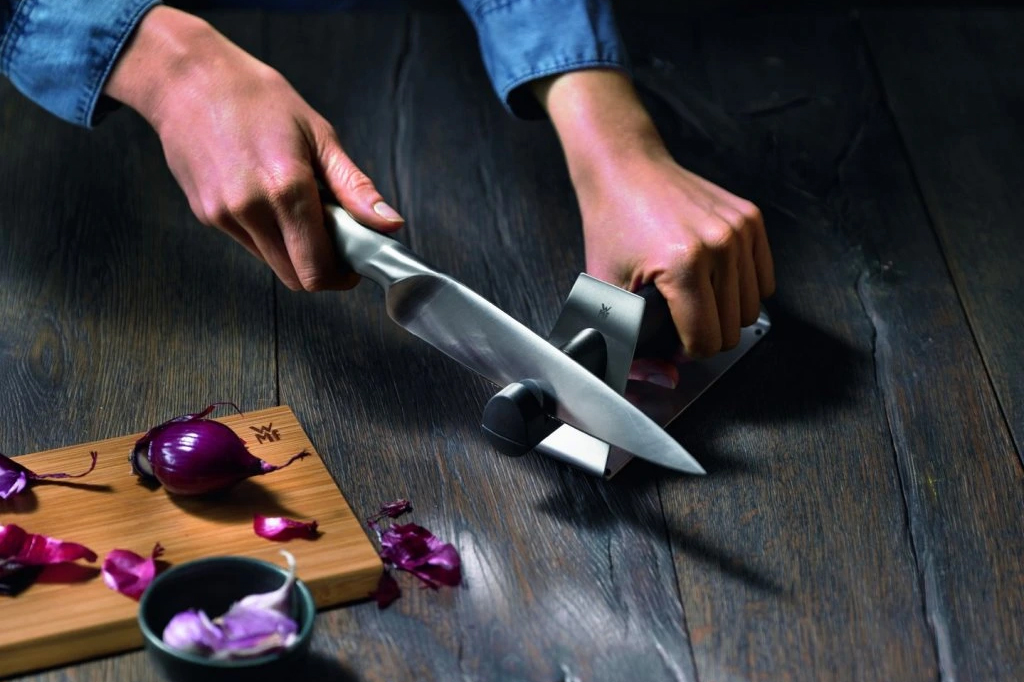
Sharpener: the daily ritual for a perfect edge
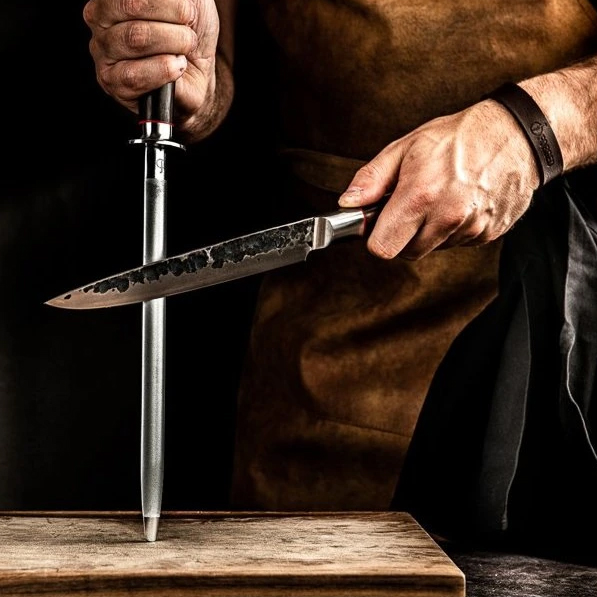
The sharpener is the key to keeping your knife in perfect condition for a long time. It's not a sharpening tool, but a quick maintenance tool - it helps to straighten out the microscopic unevenness that occurs on the blade during everyday use. Regular use of the sharpener will ensure that your knife stays in its original condition for a long time.
How to use it correctly?
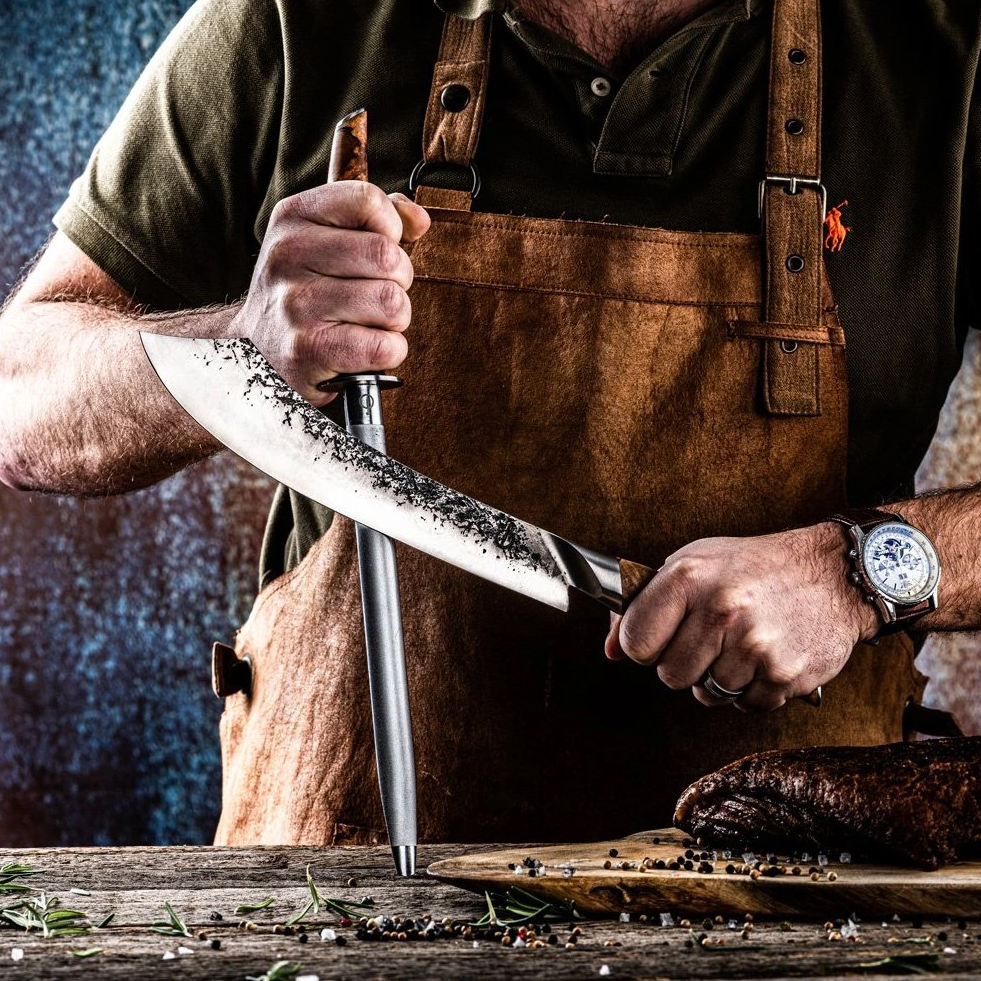
- Stand firmly, hold the sharpener vertically and rest the tip of the sharpener on the worktop.
- Place the knife at an angle of 15-20 degrees and draw it along the blade in smooth strokes - from heel to tip.
- Repeat the same movements on the other side of the blade.
What to look out for when choosing?
- Material
The steel sharpener is great for everyday blade maintenance and fits most kitchen knives. The diamond sharpener is more efficient and suitable for harder steel knives, while the ceramic sharpener is gentler and ideal for fine-tuning the blade without taking up too much material. - Length
Ideally, it should be longer than the largest knife in your kitchen.
Quality sharpeners
Grinding stone vs. grinder
Grinding stone
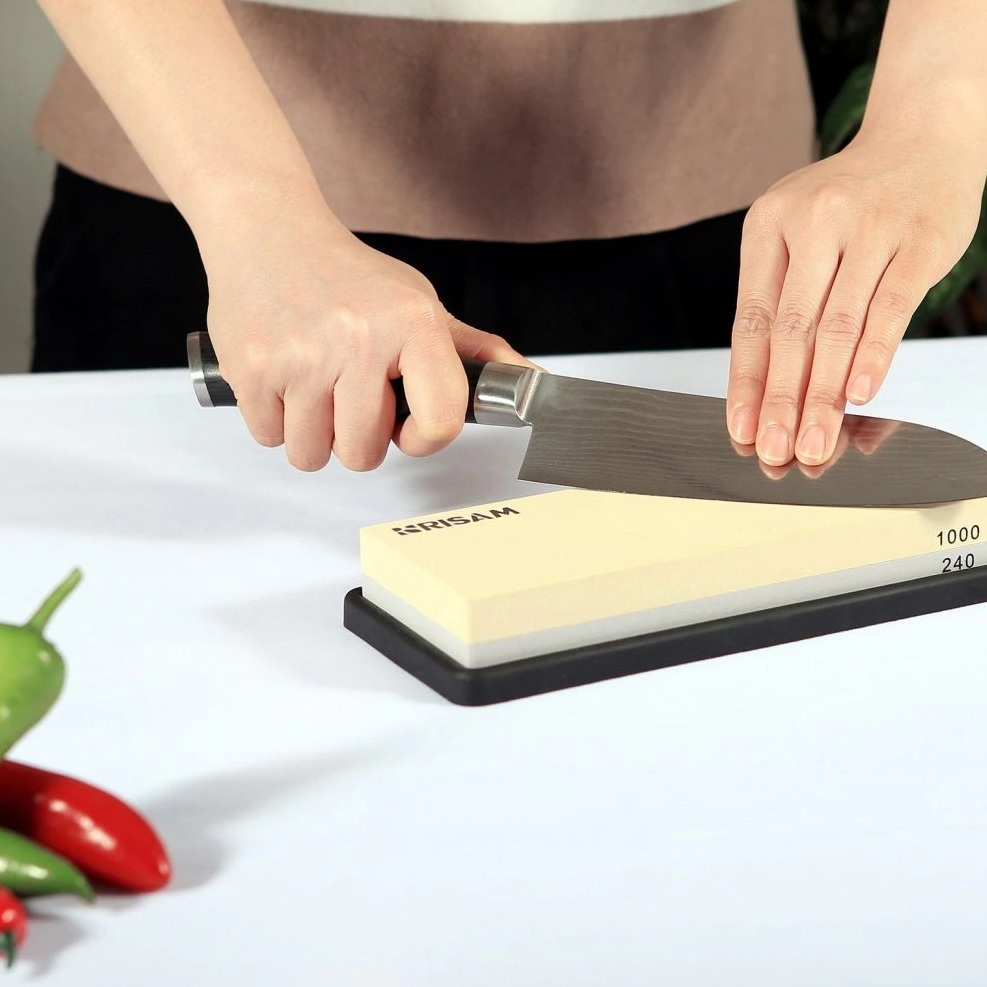
The sharpening stone is the ideal choice for those who want to achieve a truly precise edge. It takes a bit of practice, but the reward is a precision sharpened edge that rivals professional sharpening.
How to grind properly?
- If you use a water stone, soak it for a few minutes first.
- Place it on a stable surface, holding the knife at an angle of 15-20 degrees.
- Draw the blade across the stone in smooth strokes, alternating from each side.
- Finally, use a finer stone for the final touch-up.
What to look for when choosing a grinding stone?
- Rude
Low grit (200-600) repairs damaged blades, medium (800-1500) is for normal sharpening and high (3000+) for final sharpening. - Material
Waterstones are traditional and ideal for precision hand grinding as they allow gradual transitions between different grit levels. They are particularly suitable for Japanese knives or any knives with harder steel where it is important to maintain a fine edge. Diamond stones are extremely durable and effective, making them a great choice for fast sharpening of harder steels and knives that require more intensive maintenance
Brousek
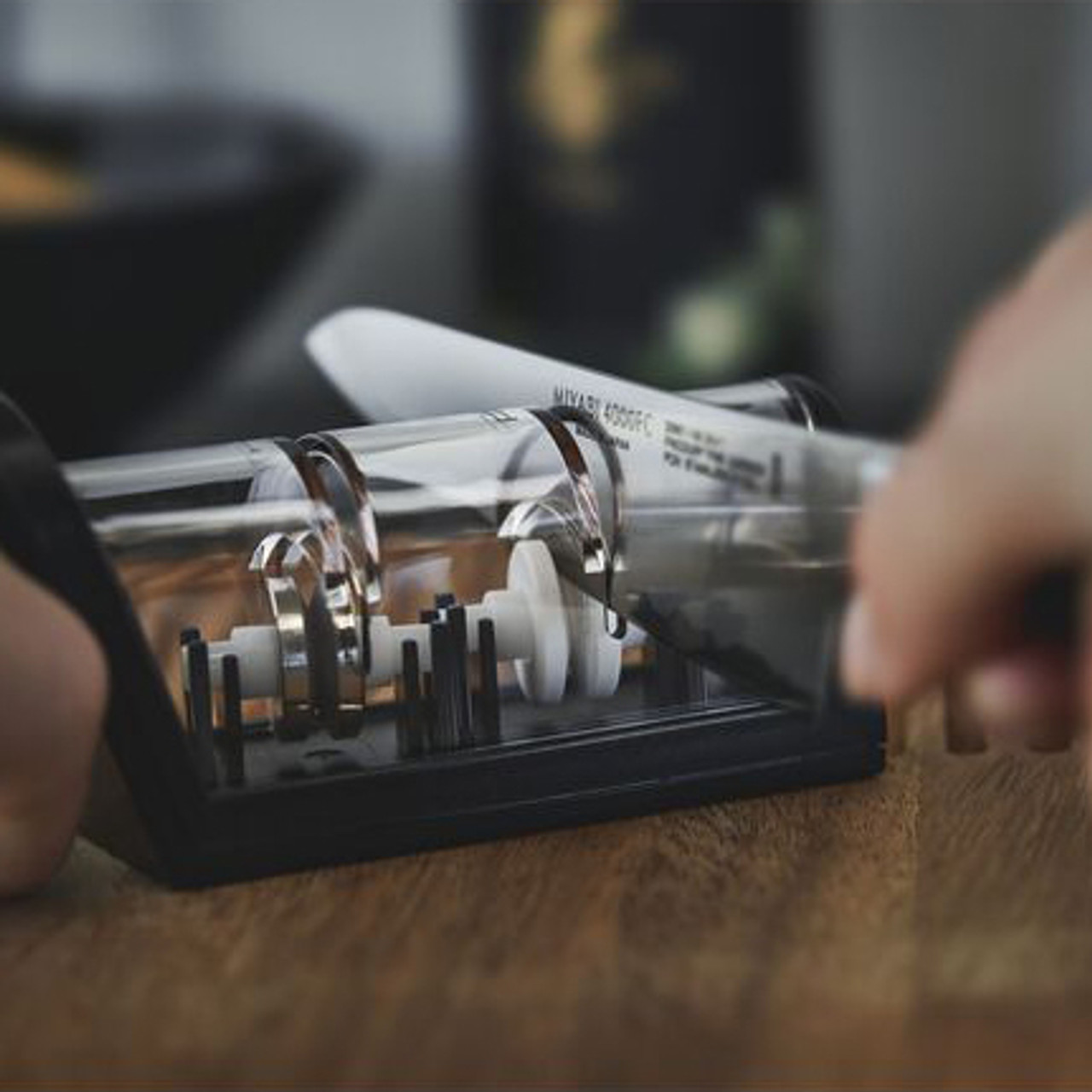
If you don't dare to work with an abrasive stone, don't despair - you can also reach for a quality sharpener, manual or electric, for easier and faster restoration of sharpness.
How to grind properly?
- Insert the knife into the guide slot at the correct angle.
- Slowly pull it through the grinder several times, without undue pressure.
- If your grinder has more than one grit level, start with the coarser one and finish with the finer one.
Which type of grinder to choose?
When choosing a grinder, it is important to consider whether to reach for a manual or electric model. Manual grinders are compact, easy to use and allow greater control over the grinding process. Electric ones are faster and ideal for those who want to sharpen their knives without much effort. For common kitchen knives, a good quality manual sharpener is suitable, while for those who frequently sharpen a large number of knives, an electric sharpener may be a better choice.
- Two-stage
Combines coarse and fine abrasives for optimum results. - Material of discs
Carbide whetstones are very effective and suitable for quick resharpening of ordinary kitchen knives, while ceramic whetstones are finer and ideal for final sharpening or maintaining sharpness on knives with higher steel hardness.
Popular grinding stones
Our tip
Read also

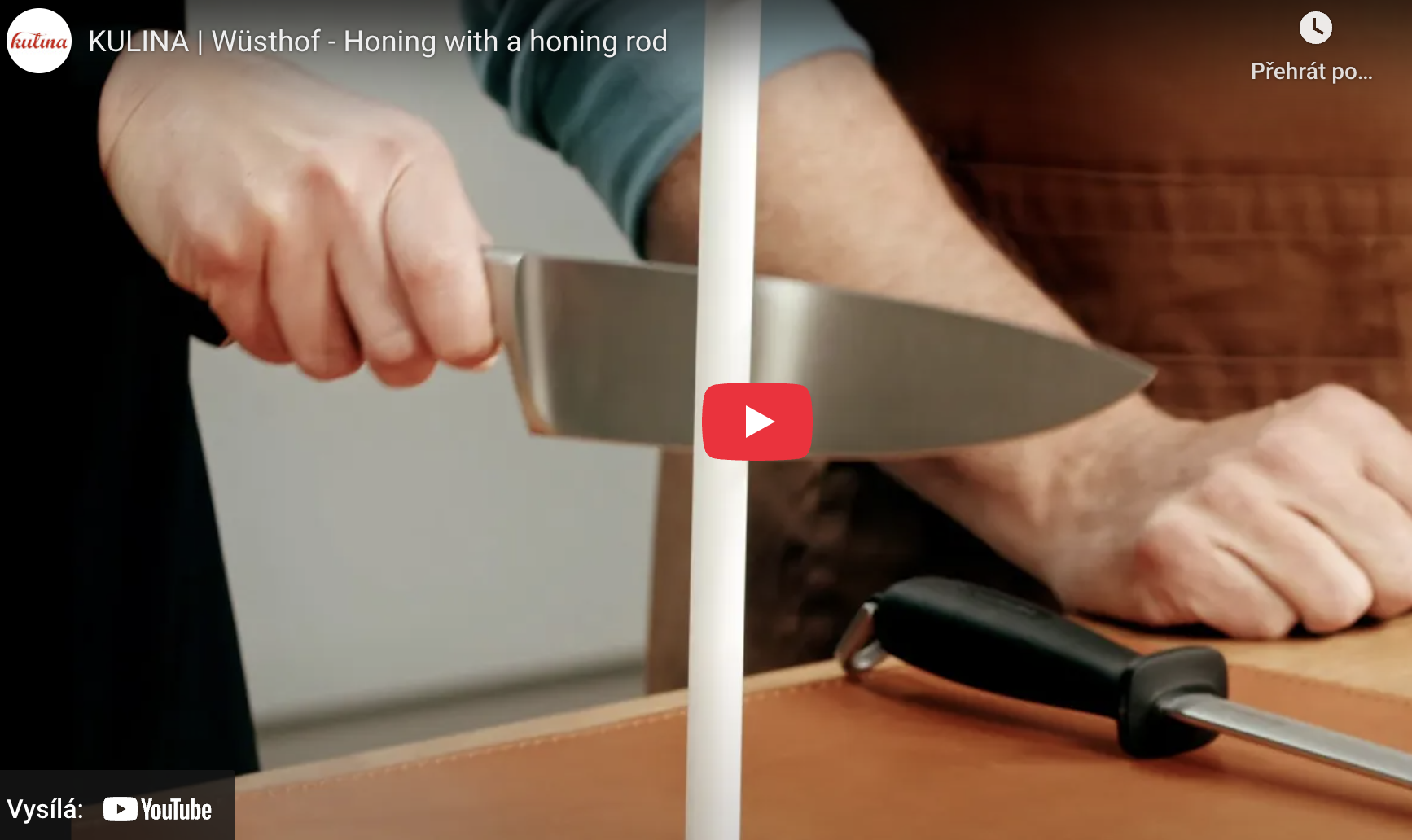
How to sharpen knives
Watch the video tutorial on how to properly sharpen and sharpen knives using a whetstone and whetstone.
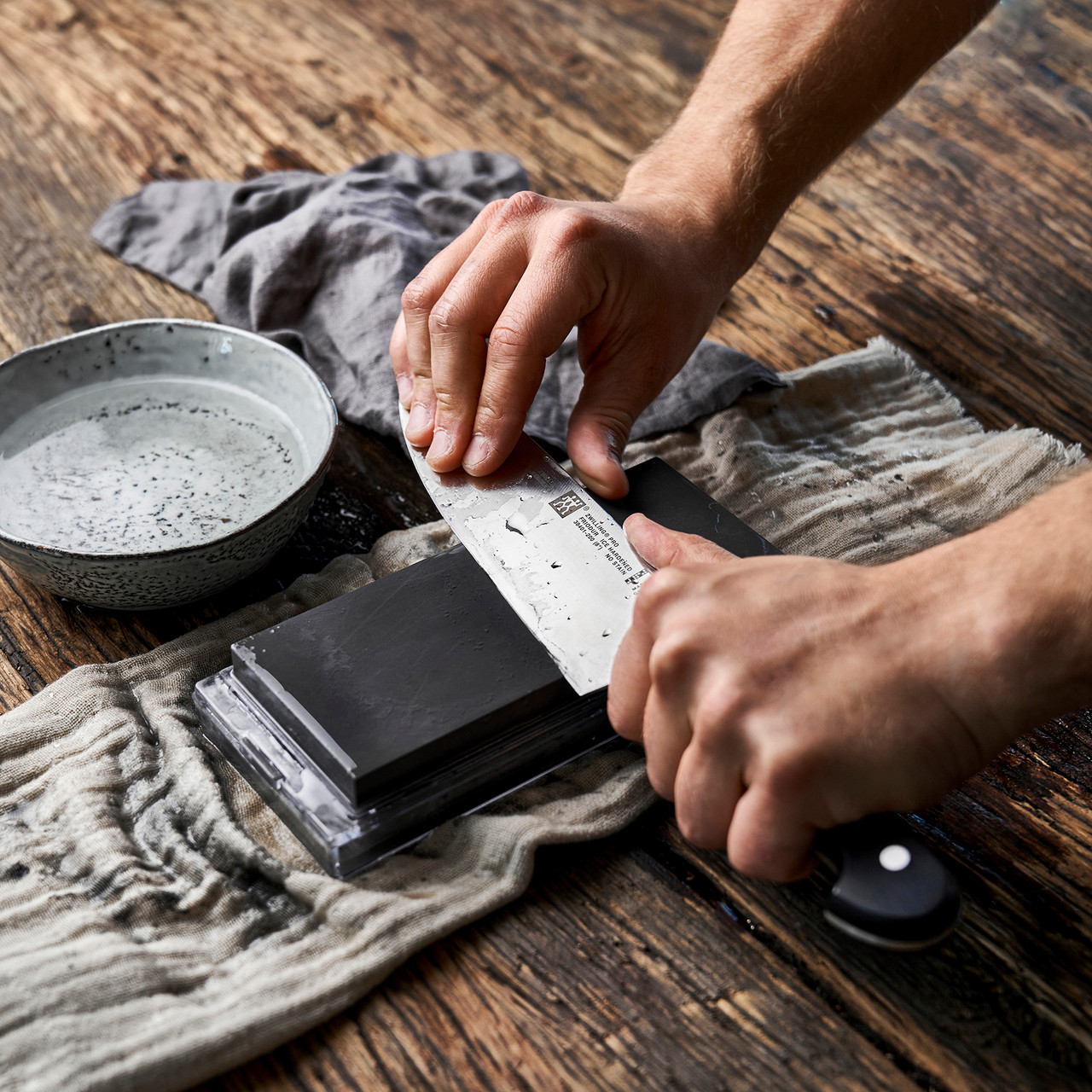
What to avoid when sharpening knives?
- Too much pressure: A light touch is sufficient, excessive force can damage the blade and reduce the sharpening efficiency. This is true for both whetstones, where too much pressure can bend or even distort the fine blade, and whetstones, where it can lead to uneven grinding or excessive removal of material from the blade.
- Wrong angle: Each tool requires a different approach. With a sharpener, it is important to keep a consistent angle between 15-20 degrees so that the blade straightens evenly and does not damage. With grinders and whetstones, the same angle applies, but here, smooth movements are key - if you change the angle while grinding, the blade will not be even and uneven blade wear can occur.
- Irregular maintenance: Knives need regular care, otherwise their blades degrade quickly and lose their effectiveness. Daily straightening of the blade with a whetstone helps keep the knife in good shape, but once in a while a more thorough sharpening with a whetstone or whetstone is necessary. If you don't sharpen your knives for a long time, they can become so dull that they become more difficult and time-consuming to restore.
The best whetstones, grinders and whetstones on the market
If you are looking for quality whetstones, grinding stones or whetstones, rely on these brands: Dellinger offers diamond-coated whetstones for efficient blade maintenance, MIYABI is famous for its precision crafted ceramic sharpeners ideal for Japanese knives and ZWILLING produces universal sharpeners suitable for everyday use. When it comes to sharpeners, all three brands offer both classic hand sharpeners and sharpening stones of different grits to ensure a perfect edge for any type of knife.
FAQ
The most frequently asked question
How often do I sharpen my knives?
The frequency of sharpening depends on how often you use the knife. For normal kitchen use, it is sufficient to resharpen the knife every few months and maintain it regularly with a sharpener.
How do I know when it's time to sharpen my knife?
If you notice that your knife is cutting more difficult, slipping on food or crushing ingredients instead of cutting cleanly, it's time to sharpen it.
Can I sharpen knives with a ceramic whetstone?
Yes, but it's important to choose the right whetstone. Ceramic sharpeners are ideal for harder steels and Japanese knives, while diamond and steel are more suitable for classic kitchen knives.
What is the difference between a whetstone and a grindstone?
The sharpener is easier to use and quickly restores the edge, while the whetstone provides a more precise and controlled sharpening, suitable for quality knives.
How to care for grinding stones?
Water stones should be soaked before use and thoroughly cleaned and allowed to dry after grinding. Diamond stones do not require soaking but should be cleaned regularly with a soft brush and water. Whether you reach for a whetstone, whetstone or grindstone, using them properly will ensure perfectly sharp knives for years to come.